


Running paid ads for an ecommerce store sounds straightforward until your cost-per-acquisition climbs, your return on ad spend drops, and every platform update reshapes the rules. The PPC agency specialisation benefits you gain by partnering with a team that works exclusively in ecommerce paid media are not marginal. They are structural. Specialised agencies bring focused expertise, better tools, and processes built entirely around the problems you face. This article breaks down exactly what those advantages look like in practice, so you can make a sharper decision about where your ad budget belongs.
Table of Contents
- Key takeaways
- 1. PPC agency specialisation benefits start with deeper expertise
- 2. Operational cost savings that actually show up on your P&L
- 3. Superior campaign performance and measurable ROI
- 4. Advanced AI tools without the implementation cost
- 5. Risk reduction and compliance protection
- 6. Scalability and flexibility for growing ecommerce businesses
- 7. Freed internal capacity to focus on what you do best
- My perspective on what specialisation really means
- Ready to see what a specialist can do for your ad spend?
- FAQ
Key takeaways
| Point | Details |
|---|---|
| Specialisation beats generalism | Agencies focused on ecommerce PPC consistently outperform generalist providers on campaign efficiency and ROAS. |
| Cost savings are measurable | Outsourcing to a specialist can be 30 to 50% more cost-effective than building an equivalent in-house team. |
| AI tools compound results | Specialised agencies use AI-driven systems to manage and optimise campaigns at a scale no single in-house hire can match. |
| Risk is actively managed | Expert teams handle platform compliance, accurate tracking, and budget controls so costly errors do not quietly drain your account. |
| Scalability is built in | A good specialised agency scales campaign management up or down with your business without you absorbing fixed overhead. |
1. PPC agency specialisation benefits start with deeper expertise
The most immediate advantage is knowledge depth. A generalist digital agency spreads its attention across SEO, social media, web design, and PPC. A specialist agency puts its entire focus on paid media for ecommerce. Every team member, every process, and every tool is calibrated for that one thing.
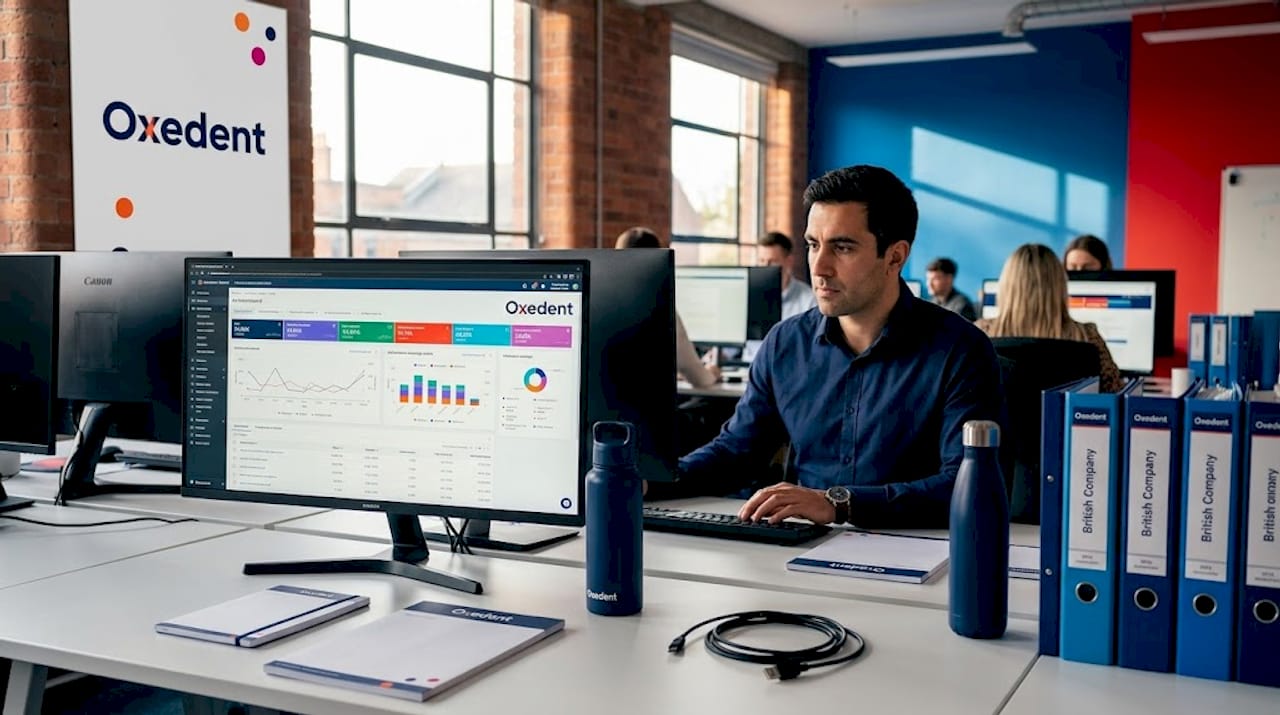

This matters because ecommerce PPC is genuinely complex. Google Shopping feed structure, Performance Max asset groupings, audience segmentation by purchase intent, and product-level bidding strategies all require specific experience that takes years to build. When you hire a PPC agency with that depth, you are not paying for someone to learn on your budget.
What this looks like in practice:
- Specialists identify wasted spend patterns within days, not months
- Experienced teams know which bid strategies suit which product margins
- Deep platform knowledge means quicker responses to algorithm changes
- Continuous campaign monitoring catches performance drops before they compound
Pro Tip: Ask any prospective agency what percentage of their client base is ecommerce. If it is below 80%, they are a generalist with some ecommerce clients, not an ecommerce specialist.
Combining industry and service specialisation allows agencies to charge premium rates and outperform generalists. The same principle applies in reverse: when you partner with a specialist, you get the calibre of work that justifies that premium.
2. Operational cost savings that actually show up on your P&L
Building an in-house PPC team costs more than most ecommerce owners expect. A single mid-level PPC manager commands a significant salary. Add employer contributions, holiday pay, training costs, and software licences for tools like bid management platforms, feed optimisation tools, and analytics suites, and the true cost climbs fast.
Outsourcing PPC management is 30 to 50% more cost-effective than maintaining equivalent in-house expertise. The savings come from not covering full salaries and avoiding expensive tool licences that agencies spread across multiple clients.
| Cost category | In-house team | Specialised agency |
|---|---|---|
| Senior PPC salary | £45,000 to £65,000 per year | Included in management fee |
| Platform tool licences | £5,000 to £15,000 per year | Shared across client base |
| Ongoing training and certifications | £2,000 to £5,000 per year | Built into agency operations |
| Recruitment and onboarding | £3,000 to £8,000 per hire | No cost to you |
Pro Tip: When comparing agency fees against in-house costs, include the total cost of employment, not just the base salary. The gap is almost always larger than you expect.
Scalability is where the financial argument becomes even clearer. Your ad management needs in November are very different from those in February. A specialist agency absorbs that variation without you carrying fixed overhead through the quiet months.
3. Superior campaign performance and measurable ROI
Better results are, ultimately, why you consider any of this. Specialised agencies deliver stronger performance because they have tested more, failed faster, and built repeatable systems that in-house teams simply do not have time to develop.
Top specialised agencies achieve client retention rates up to 98% by leveraging senior specialists and AI-driven optimisation. That figure is not a vanity metric. It tells you that clients stay because results hold.
Specific performance advantages include:
- Continuous A/B testing on ad copy, product titles, and landing pages, producing incremental conversion rate gains over time
- Sophisticated bidding strategies calibrated to your margin profile rather than a generic target CPA
- Lower ACoS and higher ROAS driven by granular negative keyword management and search term analysis
- Better attribution because specialist teams set up accurate tracking from the outset, so you can actually trust your numbers
Paid search data integrated with SEO creates a unified system that boosts overall marketing efficiency. A specialist agency that understands both channels can align your keyword strategy across paid and organic, reducing wasted overlap and strengthening your overall presence. You can explore how this works in depth through Oxedent’s guide to PPC in ecommerce growth.
4. Advanced AI tools without the implementation cost
AI-powered campaign management is no longer optional for competitive ecommerce advertising. The challenge is that deploying these tools well requires both technical knowledge and ongoing calibration. Most in-house teams do not have the bandwidth for either.
Successful PPC agencies are adopting AI systems for scalable, consistent campaign management without proportional headcount growth. The practical result is better bid adjustments at higher frequency, smarter audience segmentation, and faster identification of underperforming product groups.
When you work with a specialist agency, you access these tools without purchasing licences or training staff. The cost is built into the management fee and shared across the agency’s client base, making enterprise-grade technology accessible at a fraction of the standalone cost. Agencies applying AI-driven marketing tools for ecommerce clients are consistently seeing sharper targeting and better returns across paid channels.
5. Risk reduction and compliance protection
PPC platforms update their policies constantly. A mis-categorised product, a disapproved ad, or a misconfigured conversion action can cost you days of lost revenue before you even notice. Specialised agencies have processes to prevent exactly these situations.
Experienced PPC teams mitigate risks of policy violations, budget mismanagement, and compliance errors far more effectively than in-house teams. They work across multiple accounts daily, so they see policy shifts as they happen and adjust before problems occur.
Key protection areas include:
- Budget governance: daily spend monitoring prevents overspend during peak periods or bid anomalies
- Conversion tracking: accurate setup and regular auditing means your data reflects reality
- Policy compliance: specialist teams stay current with Google and Meta advertising policies, keeping accounts in good standing
- Brand safety: professional oversight prevents your ads appearing in inappropriate contexts that could damage customer trust
Your brand’s reputation is not a line item to optimise. It is the foundation of every conversion you earn. Specialist agencies treat brand protection as a core operational responsibility, not an afterthought.
6. Scalability and flexibility for growing ecommerce businesses
Growth is the goal, but growth creates operational pressure. More SKUs, bigger ad budgets, new markets, seasonal demand spikes. Each of these requires more campaign management capacity. With an in-house team, capacity means headcount. With a specialist agency, capacity is already built in.
Scalable PPC services allow ecommerce businesses to respond flexibly to seasonality and growth without fixed overhead increases. Here is what that flexibility looks like across common growth scenarios:
- Peak season scaling: A fashion retailer heading into the Christmas peak can increase campaign activity, expand product groups, and add promotional campaigns without hiring temporary staff.
- New product launches: A dedicated launch campaign with separate budget allocation, tailored creative, and short-cycle testing can be stood up in days.
- Market expansion: Moving into a new geography or adding a new advertising channel such as Performance Max or Demand Gen requires specialist knowledge without requiring you to recruit for it.
- Budget adjustment: Month-to-month budget changes are accommodated without renegotiating contracts or restructuring internal teams.
Review Oxedent’s ecommerce PPC agency checklist if you want a structured way to evaluate which specialist agency is best positioned to support your growth.
7. Freed internal capacity to focus on what you do best
This benefit is often underestimated. When your team is not managing campaigns, resolving tracking discrepancies, or decoding platform dashboards, that time goes back into product development, customer experience, and operational improvements.
PPC management is genuinely demanding work. Done properly, it requires daily attention, weekly analysis, and continuous creative iteration. Expecting a team hired primarily for operations, buying, or customer service to absorb this responsibility produces mediocre outcomes in both areas.
Specialised agencies function as a true extension of your marketing operation. You set the commercial direction and profit targets. They execute the paid media strategy with the kind of attention it deserves. The result is sharper performance on both sides.
My perspective on what specialisation really means
When I look at the ecommerce brands that have the most consistent results from paid ads, one pattern stands out. They did not succeed because they found a clever hack or a better bidding strategy. They succeeded because they worked with people who understood their business model deeply enough to make the right call quickly.
In my experience, the real value of a specialised PPC agency is not the tools or the processes. It is the accumulated pattern recognition. A specialist who has managed hundreds of ecommerce accounts across multiple categories has seen your problem before. They know which optimisation actually moves ROAS and which looks good in a report but changes nothing.
I also think the conversation around M-shaped PPC professionals is one most ecommerce owners are completely unaware of. These are specialists with deep paid media expertise who also understand data engineering, attribution modelling, and organic search. That combination is what makes the difference between an agency that manages your campaigns and one that actually grows your business.
The most common mistake I see is ecommerce owners choosing an agency based on price. The cheaper option almost always costs more in wasted spend, missed opportunities, and slow iteration. When you frame specialisation as a cost rather than a return, you are measuring the wrong thing entirely.
— Biplab
Ready to see what a specialist can do for your ad spend?
If this article has confirmed what you have been sensing, that generic PPC management is leaving money on the table, Oxedent is built to be the answer. As a specialist ecommerce PPC agency, Oxedent focuses exclusively on paid media for online retail brands. Every service, every process, and every optimisation decision is oriented towards one outcome: profitable, scalable growth for your store.

From Google Shopping and Performance Max to Google Ads campaign management, Oxedent works with established ecommerce businesses that are serious about improving their return on ad spend. There are no long-term contracts and no vanity metrics. Explore Oxedent’s ecommerce PPC management services to see how a specialist approach could transform your paid media results. You can also review the full picture of how Google Ads scales online stores to understand the strategic depth Oxedent brings to every account.
FAQ
What are the main PPC agency specialisation benefits?
The core benefits include deeper ecommerce expertise, access to advanced AI tools, measurable cost savings versus in-house teams, stronger campaign performance, and protection against compliance and budget risks.
How much cheaper is a specialised PPC agency than an in-house team?
Outsourcing to a specialised agency is 30 to 50% more cost-effective than maintaining equivalent in-house expertise, primarily because salaries, tool licences, and training costs are eliminated.
Why does specialisation improve PPC campaign performance?
Specialists have deeper pattern recognition from managing many ecommerce accounts, enabling faster optimisations, better bidding decisions, and more accurate tracking than generalist teams or in-house staff.
How does a specialised agency reduce risk for ecommerce brands?
Specialist agencies stay current with evolving platform policies, maintain accurate conversion tracking, and apply daily budget governance, all of which significantly reduce the risk of costly compliance errors or budget mismanagement.
Can a specialised PPC agency scale with seasonal demand?
Yes. One of the core benefits of PPC specialisation is flexible resource allocation. Agencies scale campaign management capacity up or down without you carrying fixed overhead through quieter trading periods.