


If your Meta and Google numbers never quite match Shopify, you are not imagining it. For many brands, the gap has widened as browser restrictions, consent rules and ad platform limitations strip more data out of the customer journey. That is exactly why server side tracking ecommerce has moved from a technical nice-to-have to a commercial priority.
For an eCommerce brand spending serious money on paid media, bad tracking is not a reporting problem. It is a profit problem. When platforms cannot see who bought, what they bought, or which campaigns drove the sale, bidding gets weaker, remarketing pools shrink, and budget starts leaking into audiences that look busy but do not convert.
What server side tracking ecommerce actually means
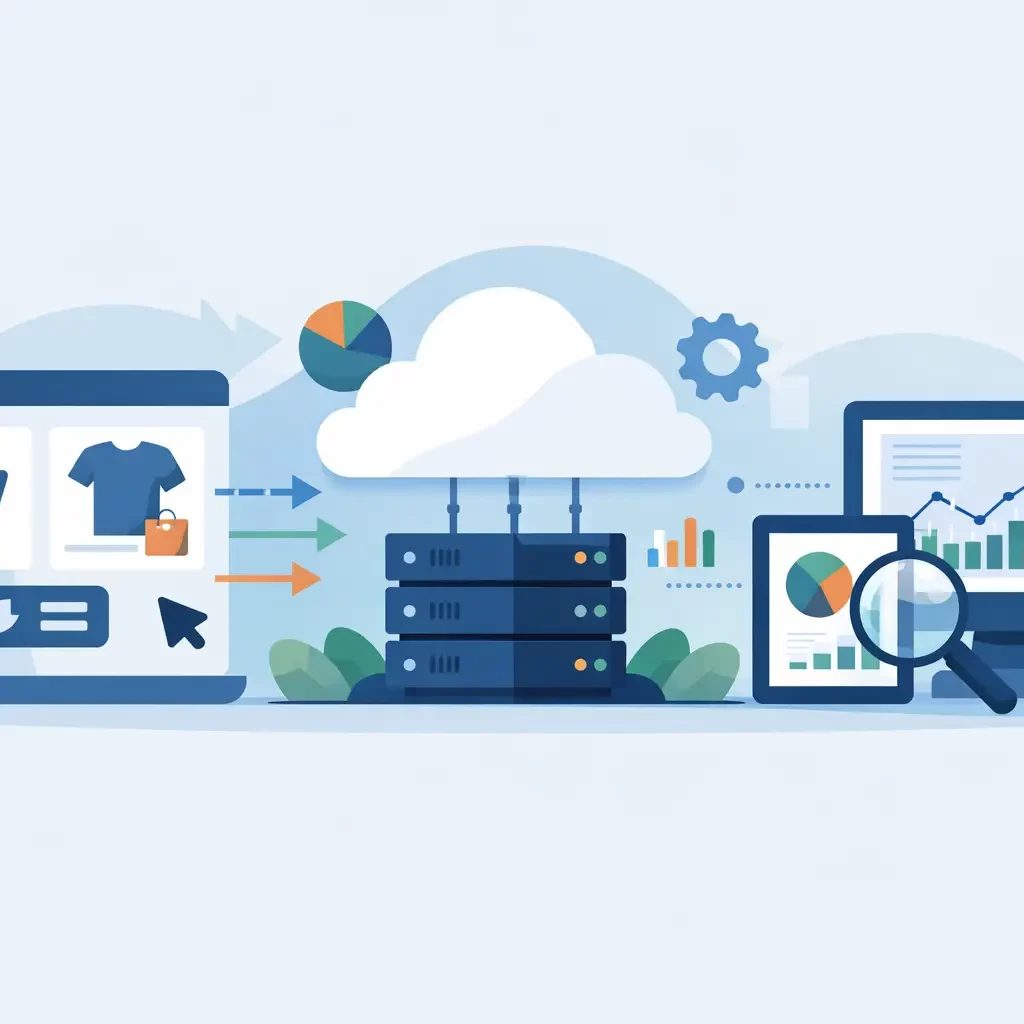
In plain terms, traditional tracking sends data from the user’s browser directly to platforms like Google Ads or Meta. Server side tracking changes that route. Instead of relying entirely on the browser, your website sends event data to your own server-side setup first, and then that server passes the data on to the platforms.
That sounds technical because it is. But the commercial reason is simple. Browser-based tracking is increasingly unreliable. Ad blockers, cookie restrictions, iOS privacy controls and script failures all reduce the amount of clean data reaching your ad accounts. A server-side setup can recover part of that lost visibility and improve how conversion data is processed.
This does not mean it bypasses privacy rules or magically restores every missing conversion. Anyone claiming that is selling fantasy. It means you create a more controlled, more resilient way to pass first-party data, subject to consent and correct implementation.
Why it matters for paid media performance
If you run eCommerce PPC at any real scale, tracking quality shapes account performance more than most brands realise. Google’s bidding models and Meta’s optimisation systems are only as good as the signals they receive. Feed them incomplete or delayed conversion data and they make weaker decisions.
That usually shows up in familiar ways. Performance Max starts favouring low-intent traffic. Meta prospecting drifts. Remarketing audiences look smaller than they should. Reported return on ad spend becomes harder to trust. Then the internal debate starts – is the account underperforming, or is the measurement broken?
Often, it is both. Weak measurement creates weak optimisation, and weak optimisation costs money.
Server side tracking ecommerce helps because it can improve event match quality, reduce data loss, and send more consistent conversion signals back to the platforms. For established brands, that can mean better attribution, stronger bidding inputs and more confidence when scaling spend.
Where server-side tracking makes the biggest difference
The biggest gains usually come from high-volume stores and brands already spending enough to care about efficiency at the margin. If you are spending a few hundred pounds a month, your biggest issue is probably not your server container. If you are spending five figures or more and trying to scale profitably, it matters a lot more.
It is especially useful when your business relies heavily on Meta, uses Performance Max aggressively, or has long enough customer journeys that browser drop-off damages attribution. It also matters when your platform setup is fragmented – for example, Shopify plus multiple apps, payment providers, and custom checkout steps that create event duplication or missing purchase data.
The more complexity you have, the more valuable control becomes.
The real benefits of server side tracking ecommerce
The first benefit is cleaner conversion data. Not perfect data, but cleaner. That means fewer lost events, better deduplication between browser and server events, and more reliable reporting across platforms.
The second is stronger optimisation. If Google and Meta receive better purchase signals, their bidding systems have a better chance of finding users who are actually likely to buy, not just click. That matters far more than having a tidy dashboard.
The third is better ownership of your data flow. With a proper setup, you are less dependent on fragile browser scripts firing exactly as expected on every device and connection. You gain more control over how events are collected, enriched and sent.
The fourth is resilience. Privacy changes are not going away. Browser-based tracking will not become easier next year. Brands that build measurement on first-party data and server-side infrastructure are generally in a stronger position than brands still relying on outdated pixel-only setups.
What server side tracking does not fix
This is where a lot of businesses get misled.
Server-side tracking will not rescue poor creative, weak offers, bad landing pages or an unprofitable product mix. It will not turn a failing ad account into a winning one on its own. If your margins are too thin, your conversion rate is poor, or your feed is a mess, the tracking upgrade helps you see the problem more clearly, but it does not solve the commercial issue.
It also will not eliminate every discrepancy between platform reporting and back-end sales data. Different attribution windows, modelled conversions and consent choices still create gaps. The goal is better decision-making, not mathematical perfection.
And if implementation is sloppy, it can make things worse. Duplicate events, broken parameters, missing consent handling and poor testing can corrupt your data fast. This is not a plugin you install on Friday and forget by Monday.
How to approach server-side tracking properly
Start with the business question, not the tech stack. What do you need your tracking to support? If the answer is profitable scaling across Google Ads and Meta, then the setup needs to prioritise purchase accuracy, event quality, deduplication and clean attribution.
From there, audit the current state. Look at how purchases are being tracked today, whether events match platform records, where consent is being applied, and how much variance exists between ad platform data and your eCommerce platform. Also check whether enhanced conversions, Conversions API and consent mode are configured correctly. Many brands jump to server-side infrastructure before fixing the obvious gaps.
Then decide on the implementation route. For some businesses, a managed setup through their platform ecosystem is enough. For others, especially brands with custom requirements or higher spend, a more tailored server-side Google Tag Manager configuration makes sense. It depends on the site architecture, the platforms in use, internal technical resource, and how much control you actually need.
The key point is this: do not treat tracking as an isolated technical project. It should sit inside your paid media strategy. If the people managing spend do not trust the data, or the developers implementing tracking do not understand what the ad platforms need, the result is usually expensive confusion.
Common mistakes that waste time and budget
One common mistake is chasing a perfect setup before fixing the basics. If your product feed is poor, your campaign structure is messy and your creative is underperforming, there is no logic in obsessing over advanced event routing first.
Another is believing platform-native claims without validation. Meta may show more attributed purchases after implementation, but that does not automatically mean the business is making more money. Always cross-check against your actual revenue and margin data.
A third mistake is treating tracking as a one-off job. Websites change. Checkouts change. Apps get added. Themes get updated. A setup that worked six months ago can quietly degrade without anyone noticing until performance drops.
The last major error is giving data ownership away. Serious brands should know how their measurement works, who controls it, and where the data goes. You do not need to become a developer, but you do need accountability.
Is server side tracking ecommerce worth it?
For many established brands, yes. Not because it is fashionable, but because better measurement improves the quality of bidding, attribution and budget allocation. When paid media is a serious growth channel, that matters.
But the answer depends on scale and context. If your site is simple, spend is modest and the existing setup is already accurate enough for confident decisions, the return may be limited. If you are spending heavily, seeing major tracking gaps, and trying to push harder on Google and Meta without wasting budget, the case becomes much stronger.
That is the commercial lens to use. Not whether server-side tracking sounds advanced, but whether it helps you make better decisions with real money.
For a specialist eCommerce PPC agency like Oxedent, that is the only lens worth using. Tracking is not there to make reporting look smarter. It is there to protect spend, improve signal quality and support profitable scale.
The brands that win over the next few years will not be the ones with the flashiest dashboards. They will be the ones that know their numbers, trust their data enough to act on it, and build measurement around commercial reality rather than platform guesswork.