


Prioritise a thumb-stopping hook, a short product demo, and a structured testing loop. Those three moves account for more of your ROAS improvement than any bidding adjustment you will make this quarter. Ad creative accounts for a significant portion of campaign performance variance on Meta, Google Shopping, and TikTok, which means the creative decision is almost always the highest-leverage one. Target a Hook Rate above a third and a Thumb-stop Rate above a quarter as your leading indicators, and judge every creative by CPA and ROAS, not by likes or reach.
Your 72-hour starting point:
- Replace your current lead creative with a 6–15 second product-in-use video that opens on the product within the first second.
- Pull three real customer review snippets and test them as caption overlays on your best static ad.
- Set kill criteria in your dashboard before you launch anything new: if Hook Rate stays below 25% after 48 hours, pause and replace.
Table of Contents
- Ecommerce ad creative best practices: the ranked checklist
- Platform specs and quick rules for Meta, TikTok, YouTube, and Google
- How to test creatives and measure what actually matters
- Building a creative production system that protects ROAS
- Caption, copy, and shot-list templates you can use today
- Key takeaways
- What most ecommerce brands get wrong about creative
- Oxedent’s ecommerce PPC management delivers real creative performance
- Useful sources and further reading
Ecommerce ad creative best practices: the ranked checklist
Good creative is not a matter of taste. It follows a structure, and that structure is repeatable. Each practice below includes what to do, why it moves the needle, and how to implement it without wasting production budget.
1. Stop the scroll in the first three seconds
Your opening frame is a binary gate. If it fails, nothing else in the ad matters. Show the product in action, a surprising result, or a bold text statement that speaks directly to a pain point. Avoid slow logo reveals, stock footage intros, or any frame that could belong to any brand.


Pro Tip: Test your first frame as a static image before you shoot the full video. If the still image does not make someone pause, the video will not either.
2. Show the product in use, not on a shelf
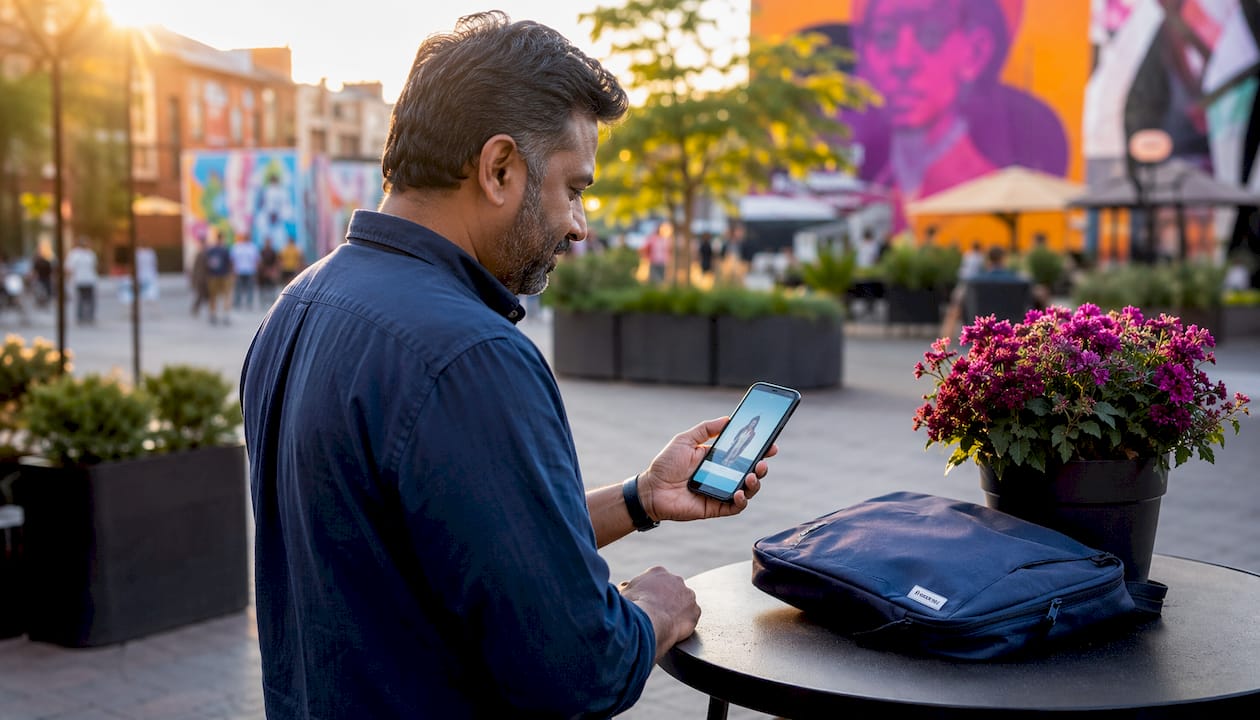
Demonstration beats description every time. A viewer who watches your product being used can picture owning it, and that mental simulation is what drives add-to-cart behaviour. Close-up shots of texture, scale, and function outperform lifestyle imagery that buries the product in a scene.
3. Match format to funnel stage
Short-form video (15–30 seconds) works at the top of the funnel where you need attention fast. UGC testimonials and longer demos (30–60 seconds) suit the consideration stage, where buyers want reassurance. Static or carousel ads perform best for retargeting, where the viewer already knows the product and needs a single, clear reason to return. Matching format to funnel stage is one of the most consistent CPA levers available to ecommerce brands.
4. Lead with UGC over polished studio creative
On Meta and TikTok, UGC outperforms polished studio creative by 20–50% on CPA across many ecommerce categories. The reason is straightforward: native-looking content reduces ad avoidance because it blends with organic posts. Brief your creators with a shot list and a clear message, but resist the urge to over-direct. Authenticity is the asset.
5. One message, one CTA, one offer
Mixed messaging is one of the most common and costly mistakes in ecommerce ad creative. If your ad mentions free delivery, a 20% discount, and a bundle offer in the same frame, the viewer processes none of them clearly. Pick the single strongest offer for the audience segment and build the entire creative around it. Your CTA should be visible, specific, and matched to the funnel stage: “Shop Now” for cold traffic, “Get Yours Today” for warm audiences, “Claim Your Discount” for retargeting.
6. Add captions and text overlays for sound-off viewing
Most social media video is watched without sound. Captions are not optional. Place your key message as a text overlay in the first three seconds so the silent viewer gets the hook immediately. Keep caption text large enough to read on a mobile screen without zooming.
7. Stack trust signals inline
Review snippets, star ratings, and sales counters compound conversion lifts when placed inside the creative itself rather than left to the landing page. Static formats work particularly well for stacking trust signals because viewers can scan multiple proof points at a glance. A single line such as “4.8 stars from 2,400 UK customers” placed near the CTA can meaningfully lift click-through on retargeting ads.
8. Keep aspect ratios in safe zones
A creative that crops awkwardly destroys credibility instantly. Shoot and edit in 9:16 for Reels and TikTok, 1:1 for feed placements, and 16:9 for YouTube. Keep your product and any text within the central 80% of the frame to avoid platform UI overlays cutting off key information.
9. Avoid the most common creative mistakes
- Over-editing: Heavy transitions and effects signal low-quality content to the algorithm and distract from the product.
- Optimising for engagement: Likes and shares do not pay invoices. If your creative drives comments but no purchases, it is failing at its actual job.
- Scaling a creative before it has proven CVR: A high Hook Rate with a low conversion rate means the hook is misleading. Fix the offer or the landing page before you spend more.
Platform specs and quick rules for Meta, TikTok, YouTube, and Google
Every platform has its own creative language. What wins on TikTok often underperforms on Google, and vice versa. The table below gives you the production essentials; the notes below it cover the strategic nuance.
| Platform | Aspect ratio | Recommended length | Captions | Safe zone | Key creative priority |
|---|---|---|---|---|---|
| Meta Reels / Stories | 9:16 | 6–15s (awareness), up to 30s (story) | Required; auto-captions available | Keep text/logo in central 80% | UGC hook, product demo |
| Meta Feed (image/video) | 1:1 or 4:5 | 15–30s video; static also strong | Recommended | Avoid bottom 20% (CTA bar) | Social proof, single offer |
| TikTok | 9:16 | 9–15s (top performers); up to 60s | Required; native text overlays | Avoid top 15% and bottom 25% | Native UGC, trending audio |
| YouTube Shorts | 9:16 | Up to 60s | Recommended | Central 80% | Discovery hook, demo |
| YouTube TrueView | 16:9 | 15–30s skippable; 6s bumper | Optional but advised | Standard broadcast safe | Brand story, product proof |
| Google Performance Max | Mixed (1:1, 4:5, 16:9) | 10–30s video; static images | Not applicable to images | Platform-assembled | Asset variety and volume |
Platform-specific notes:
- Meta: Demo plus social proof is the winning combination. UGC that opens mid-sentence or mid-action tends to outperform polished intros, based on platform trends. Use Facebook’s native auto-caption tool but always review the output for accuracy.
- TikTok: The platform rewards content that looks organic. Use trending sounds where they fit the product, keep text overlays minimal and bold, and brief creators to speak directly to camera in the first two seconds.
- YouTube Shorts: Treat the first frame as a thumbnail. Discovery intent is high, so lead with a clear product benefit rather than brand identity.
- Google Performance Max: Google recommends at least seven image assets, including a 1200×1200 square, and regular creative refreshes. The system assembles combinations automatically, so asset variety matters more than any single polished piece. Pair this with a well-structured Google Shopping setup to maximise coverage across the asset group.
File and caption checklist:
- Video: MP4 or MOV, H.264 codec, maximum 4GB per platform upload
- Images: JPG or PNG, minimum 1080px on the short side
- Subtitles: SRT file or platform auto-captions; always review before publishing
- First frame: product visible, no black leader, no slow fade-in
- Logo placement: upper-left or upper-right, within the safe zone, never obscuring the product
How to test creatives and measure what actually matters
Vanity metrics are expensive distractions. The metrics that matter for ecommerce are ROAS, CPA, and conversion rate (CVR), with Hook Rate and Thumb-stop Rate as the leading indicators that tell you whether a problem is in the hook, the body, or the CTA.
Optimise in this order: fix the hook first (Hook Rate below 25% means the creative never gets a chance), then the body (Hold Rate tells you if viewers are staying), then the CTA (Outbound CTR and CVR confirm whether the offer is landing).
The 3-2-2 test framework
The 3-2-2 framework isolates one variable at a time: three creative approaches, two primary text variations, and two headlines within the same ad set. This structure tells you which element is driving performance rather than leaving you guessing at a combination. Run each test for 48–72 hours minimum, or until each variant has received at least 1,000 impressions, before drawing conclusions.
| Metric | What it measures | Decision threshold |
|---|---|---|
| Hook Rate | % of viewers who watch past 3s | Kill below 25%; scale above 30% |
| Hold Rate | % who watch to 50% of video | Signals body quality; benchmark 1/3 |
| Outbound CTR | % who click through to site | Category-dependent; watch for relative drop |
| CVR | % of site visitors who purchase | Primary revenue signal |
| CPA | Cost per acquisition | Compare against target CPA; kill if 2× over |
| ROAS | Revenue per £1 of ad spend | Primary scaling signal |
Budget split: allocate roughly 70% of your spend to scaling proven winners and 30% to ongoing creative testing. This ratio keeps revenue stable while the testing pool continuously refreshes your creative library.
Creative test checklist:
- Define your kill criteria before launch (e.g. Hook Rate below 25% at 48 hours, CPA more than twice your target).
- Change one variable per test. Do not swap the hook and the CTA simultaneously.
- Set a minimum impression threshold before judging (1,000 impressions per variant as a floor).
- Document every result, including the losers. Failed hooks are as valuable as winners.
- Stop a test early only if spend is burning at more than 3× your target CPA with no sign of improvement.
Attribution caution for UK ecommerce: browser privacy changes and iOS tracking restrictions mean platform-reported ROAS often overstates true performance. Cross-reference platform data with your Shopify or GA4 revenue figures, and use a blended ROAS calculation across channels rather than trusting any single platform’s attribution window. If your numbers diverge significantly, an ad account audit is the fastest way to identify where the gap is coming from.
Building a creative production system that protects ROAS
Creative velocity is a performance variable, not just an operational one. Brands producing a high volume of new creatives weekly tend to see substantially lower CPA compared with those updating less frequently. The gap is not about budget; it is about having a system.
The repeatable production workflow
A practical cycle runs: ideation → scripting → shoot → edit → variant generation → test → document. Each stage should have a named owner and a time budget. Ideation and scripting take one to two days; shooting with a creator or phone setup takes half a day; editing and variant generation take one day; testing begins within 48 hours of launch.
Hook library: every hook that achieves a Hook Rate above 30% gets logged. Document the hook headline, the emotion or angle it uses (curiosity, pain point, social proof, transformation), the product category it was tested on, and the thumb-stop result. This library becomes your fastest source of new creative ideas because you are iterating on proven structures rather than starting from scratch.
Resource model:
- In-house team: handles brand consistency, brief writing, and final approvals
- UGC creators: supply authentic footage and testimonials at speed and lower cost than studio production
- AI and programmatic tools: assemble variants, resize for platform specs, and generate caption alternatives at scale
Pro Tip: When briefing UGC creators, send a one-page brief with three required shots (hero product shot, in-use close-up, result or reaction) and one required spoken line. Anything beyond that should be left to the creator’s natural style. Over-scripted UGC reads as scripted.
A documented hook library shortens production cycles because your team stops debating angles and starts testing variations of angles that have already proven their thumb-stop value. For brands running profitable ecommerce ad strategies at scale, this operational discipline is what separates a creative programme that compounds from one that resets every quarter.
Refresh your creative when 7-day frequency is high or when CVR drops significantly from its peak. Those two signals together indicate audience fatigue rather than a seasonal dip. In-store visual merchandising principles, such as those covered in retail display guidance, can also inform how you stage products for creative shoots, particularly for lifestyle and context shots.
Caption, copy, and shot-list templates you can use today
Caption and headline templates by funnel stage
Top of funnel (cold audiences):
- “You’ve been doing [task] wrong. Here’s the fix.” + product demo
- “Why [problem] keeps happening — and what actually works”
- “The [product category] UK shoppers are switching to in 2026”
Middle of funnel (warm, considering):
- “4.8 stars from [X] customers. Here’s what they said.”
- “[Product] + free UK delivery. Limited stock.”
- “See why [X] people chose [product] over [generic alternative]”
Bottom of funnel (retargeting):
- “Still thinking about it? Here’s 10% off — today only.”
- “Your basket is waiting. Free returns, no risk.”
- “Last chance: [offer] ends midnight.”
Phone shoot checklist for creator briefs
- Natural light or a ring light; avoid harsh overhead shadows on the product
- Shoot in 9:16 vertical for social; capture a 1:1 crop of the hero product separately
- Required shots: product unboxing or reveal, product in use (close-up of key feature), result or reaction
- First spoken line delivered within one second of pressing record
- No branded intro; start mid-action
Three creative blueprints
Blueprint 1: UGC testimonial (15–30 seconds)
Creator opens speaking directly to camera: “I wasn’t sure about this, but…” → shows product → demonstrates result → closes with “Honestly, I’d recommend it.” Caption overlay: star rating + review count. Best for: beauty, supplements, home goods, mid-funnel.
Blueprint 2: Product demo with close-ups (8–15 seconds)
First frame: product in use, no intro. Cut to close-up of key feature. Text overlay: primary benefit. Cut to result. CTA card: “Shop Now — Free UK Delivery.” Best for: gadgets, kitchenware, fitness, top-of-funnel cold traffic.
Blueprint 3: Carousel — problem, solution, proof, offer
- Card 1: Bold problem statement (“Tired of [pain point]?”)
- Card 2: Product as solution, single benefit headline
- Card 3: Review snippet or star rating
- Card 4: Offer + CTA (“Get Yours — Free Returns”)
Best for: retargeting, fashion, multi-variant products, bottom-of-funnel.
When to choose each blueprint:
- UGC testimonial: when social proof is your strongest asset and the product needs credibility
- Demo with close-ups: when the product’s function is its own best argument
- Carousel: when retargeting an audience that has already seen your brand and needs a final nudge
Key takeaways
The single most important shift you can make is treating creative as a documented, repeatable system rather than a series of one-off productions — that discipline, more than any individual ad, is what compounds ROAS over time.
| Point | Details |
|---|---|
| Hook Rate is your first signal | Target above 30%; kill any creative below 25% after 48 hours and replace the hook. |
| Creative drives most of performance | Ad creative accounts for roughly 50–70% of campaign performance variance on Meta, TikTok, and Google Shopping. |
| UGC beats polished studio on social | UGC outperforms studio creative by 20–50% on CPA across many ecommerce categories on Meta and TikTok. |
| Test with discipline, not instinct | Use the 3-2-2 framework, change one variable at a time, and allocate 70% of spend to scaling winners. |
| Oxedent for managed creative performance | Oxedent’s ecommerce PPC management focuses on ROAS and CPA, not vanity metrics, for brands ready to scale. |
What most ecommerce brands get wrong about creative
The prevailing advice is to “test more creatives.” That is correct but incomplete, and the incomplete version is what causes brands to burn budget without learning anything useful.
The real discipline is not volume for its own sake. It is documented velocity: producing creatives against a structured brief, logging every result against a consistent set of metrics, and building a hook library that gets smarter with each test cycle. Brands that produce 20 or more creatives weekly and see lower CPAs are not doing so because they have bigger teams. They have a system that removes the guesswork from ideation.
The caution I would add from agency practice is this: a high Hook Rate is not a green light to scale. It is a green light to check CVR. A creative that stops the scroll but misleads the viewer about the product will generate clicks that do not convert, and scaling that creative is one of the fastest ways to destroy a profitable account. Always confirm that CVR is holding before you increase spend, and treat a CVR drop of more than 20% from peak as a hard signal to pause and investigate.
The micro-recommendation: before your next creative batch, write your kill criteria on a shared document and get sign-off from whoever controls the budget. The discipline of pre-committing to a kill threshold is what separates a testing programme from an expensive opinion poll.
Oxedent’s ecommerce PPC management delivers real creative performance
Producing great creatives is only half the equation. The other half is making sure they run inside a paid media structure that converts spend into profit, not just traffic. Oxedent’s ecommerce PPC management service is built entirely around that outcome: ROAS, CPA, and scalable revenue for established UK ecommerce brands. The agency manages Google Ads, Facebook Ads, Google Shopping, and Performance Max with a strict focus on profitability, and works without long-term contracts because the results are what keep clients in place.

If your creative is improving but your account structure is holding back performance, an audit is the fastest way to find out. Get in touch with Oxedent to discuss your current campaigns and where the biggest gains are.
Useful sources and further reading
- Google Performance Max creative asset best practices — Google’s official guidance on asset types, minimum quantities, and refresh cadence for Performance Max campaigns.
- Ecommerce ad creative framework — EcomStacked — Operator-level breakdown of the hook-story-demo-CTA structure, hook library documentation, and the 70/30 budget split framework.
- Facebook ad design tips for ecommerce — DEV Community — Covers the 3-2-2 testing framework, Hook Rate and Thumb-stop Rate targets, and creative velocity benchmarks.
- Ecommerce ad creative tips: lower CPA and lift ROAS — eSellSphere — Practical tactics covering UGC performance data, funnel-stage format matching, and trust signal stacking.
- Google Ads campaign types for ecommerce — Oxedent — Explains how to map creative assets to the right campaign type across Google’s network.
- How to scale ecommerce revenue with paid ads — Oxedent — Guidance on maintaining ROAS while scaling spend, including creative refresh timing.