
Ecommerce PPC mistakes UK brands keep making

Updated on 30/07/2026 at 05:00 am
Most UK ecommerce PPC waste comes from three sources: poor negative-keyword control, mismatched bid strategies, and broken conversion tracking. Fix those in week one and you will recover meaningful budget before you touch anything else. The mistakes below are not theoretical — they are the patterns Oxedent sees repeatedly when auditing established UK ecommerce accounts, and every one of them has a practical fix.
Your tl;dr checklist — check these today:
- Are you reviewing your search term reports at least weekly in active campaigns?
- Do you have a shared negative keyword list applied across Search and Shopping?
- Is your Google Analytics 4 purchase event firing correctly and passing revenue values?
- Are your campaigns segmented by product category and margin band, not lumped into one?
- Does every ad land on a product or category page that matches the ad’s headline and offer?
- Have you set minimum conversion volume thresholds before switching to Smart Bidding?
- Is your Google Merchant Center feed free of disapprovals and price mismatches?
- Are you separating branded and non-branded campaigns and tracking them independently?
- Do your ad creatives comply with ASA CAP Code rules, particularly around misleading claims?
- Are you running a weekly tactical check and a monthly strategic review?
Your one-week action plan:
- Monday: Pull your search term report for the last 30 days. Flag every irrelevant query spending more than £5. Add them as negatives today.
- Tuesday: Open Google Analytics 4 and verify your purchase event is firing with correct revenue values. Cross-reference with your Google Ads conversion column.
- Wednesday: Audit your campaign structure. If you have one Shopping or Search campaign covering your entire catalogue, plan a segmentation split by category or margin.
- Thursday: Check your Google Merchant Center for active disapprovals. Fix shipping errors and image issues first — they account for the largest share of disapprovals.
- Friday: Review your landing pages against your top five ads. Does the headline match? Does the offer on the page match the ad copy? Fix any mismatches.
- Weekend: Set a calendar reminder for a monthly strategic review. Define who owns weekly checks (paid media), feed updates (merchandising), and page fixes (development).
Table of Contents
- 1. Budget and bidding mistakes that drain your ecommerce ad spend
- 2. Keyword and search-term mistakes that waste your budget
- 3. Tracking and measurement mistakes that corrupt your bidding
- 4. Campaign structure errors that cost you bid control
- 5. Creative and landing-page mistakes that kill your conversion rate
- 6. Audience mistakes that leave repeat revenue on the table
- 7. Automation pitfalls: when Smart Bidding works against you
- 8. Shopping feed mistakes and Google Merchant Center pitfalls
- 9. Reporting cadence and how often you should act on data
- 10. Regulatory and creative risks UK brands face from the ASA
- 11. How to spot if your agency or partner is making these mistakes
- 12. VAT and tax considerations in PPC bids and promotions
- 13. Integrating PPC with UK ecommerce platforms and payment gateways
- 14. UK competition and price comparison sites: what brands get wrong
- Key takeaways
- The mistakes we see most often, and how we prioritise fixes
- Oxedent’s ecommerce PPC audit: find the waste, fix the foundations
- Useful sources and official references
1. Budget and bidding mistakes that drain your ecommerce ad spend
The most common budgeting error is running one campaign with one budget across products that have wildly different margins and purchase intent. A £50 accessory and a £500 appliance should never compete for the same daily budget — the algorithm cannot distinguish between them, and you end up subsidising low-margin clicks with high-margin budget.

How to allocate budget by margin and intent:
Structure your budget allocation around three variables: gross margin band, product category, and traffic type (brand vs non-brand). High-margin categories should receive proportionally higher budgets because they can sustain a higher cost per acquisition and still return profit. Brand campaigns typically convert at lower cost because the shopper already knows you — so they need less budget relative to non-brand campaigns chasing new customers. Seasonal budget shifts matter too: Boxing Day and Black Friday in the UK require pre-planned budget increases, not reactive ones. If you wait until the day to raise budgets, Google’s algorithm needs time to adjust delivery, and you miss the peak window.
Choosing the right bid strategy:
Manual CPC gives you control but demands time. Smart Bidding strategies like Target ROAS and Target CPA use machine learning, but they require sufficient conversion data to work reliably. A campaign with fewer than 30–50 conversions per month is not ready for Target ROAS — the algorithm will make poor decisions because it lacks the signal volume it needs. Start new campaigns on Maximise Clicks or manual CPC, build conversion history, then graduate to automated strategies once the data is there.
Pro Tip: To derive your target ROAS from gross margin, divide 1 by your gross margin percentage. A product with a 40% gross margin needs a minimum ROAS of 2.5 just to break even on ad spend before overheads. Set your target ROAS above that floor, not below it, and review it quarterly as margins shift.
UK retail has distinct seasonal peaks beyond Black Friday. Brands that pre-load budgets for the post-Christmas sale period (Boxing Day through early January) and Mother’s Day consistently outperform those that rely on default daily budgets. Build a seasonal budget calendar at the start of each quarter and share it with whoever manages your Google Ads account.
2. Keyword and search-term mistakes that waste your budget
Ignoring negative keywords and misusing broad match are the top two sources of wasted spend in ecommerce PPC. Failing to manage negative keywords is a primary cause of budget drain, and search term reports should be reviewed at least weekly in new campaigns. Broad match without a robust negative list will serve your ads to people searching for jobs, free products, DIY tutorials, and competitor brand names — none of whom are buying from you today.

Your weekly and monthly search-term review workflow:
Weekly (paid media manager):
- Filter the search term report by cost, descending. The top spenders are your priority.
- Flag any term containing “free”, “jobs”, “how to”, “DIY”, “review” (without buying intent), or a competitor brand name.
- Add confirmed irrelevant terms to your shared negative list immediately.
- Check for any new high-spend terms that should become exact-match keywords in their own right.
Monthly (paid media manager + trading team):
- Review the full negative keyword list for conflicts — negatives that are accidentally blocking relevant terms.
- Analyse which search terms drove conversions and whether they belong in a tighter match type.
- Cross-reference Shopping search terms with Search campaign terms to avoid duplication and budget cannibalisation.
UK-specific negatives to add from day one:
The role of search exclusions in Google Ads is often underestimated. Build a shared exclusion list that includes: “free”, “jobs”, “careers”, “wholesale”, “trade price”, “second hand”, “used”, “refurbished” (unless you sell those), “how to make”, “DIY”, and any competitor brand names you are not deliberately targeting. Apply this list at account level so it covers both Search and Shopping campaigns.
Pro Tip: Sort your search term report by cost, not clicks. The terms costing the most are rarely the ones you notice first. A single irrelevant term spending £200 per month is worth more of your attention than twenty terms spending £5 each. Fix the big ones first.
Match types should serve a purpose. Use broad match for discovery when you have strong negatives in place and sufficient budget to absorb some waste. Phrase match is your workhorse for intent-qualified traffic. Exact match protects your highest-converting terms from dilution. Never run broad match without a weekly negative review — it is the fastest way to haemorrhage budget on irrelevant queries.
3. Tracking and measurement mistakes that corrupt your bidding
Broken or incomplete conversion tracking is the single biggest reason Smart Bidding and ROAS targets fail. If Google Ads cannot see your purchase events accurately, Target ROAS is optimising against phantom data — and you will not know it until your ROAS report looks fine but your actual revenue does not match.
Conversion tracking diagnostic — run this now:
- Open Google Tag Assistant or the Google Ads Tag Diagnostics panel and confirm your purchase tag is firing on the order confirmation page only (not on every page load).
- Check that the revenue value is being passed dynamically, not as a static placeholder.
- If you use cross-domain tracking (e.g., a third-party checkout), confirm the GA4 linker parameter is passing correctly between domains.
- Compare your Google Ads reported conversions against GA4 transactions for the same period. A gap of more than 10–15% warrants investigation.
- If you import offline conversions (e.g., phone orders), verify the upload schedule is running and the GCLID field is populated.
Common GA4 and attribution errors:
| Symptom | Likely cause | Quick test |
|---|---|---|
| Purchase event fires multiple times per order | Tag fires on page load, not on a unique confirmation event | Check Tag Assistant for duplicate purchase hits |
| Revenue in GA4 is lower than actual sales | Revenue value not passed dynamically | Inspect the dataLayer push for value parameter |
| Zero conversions in Google Ads despite sales | Conversion action not linked to campaign | Check Tools > Conversions > Action status |
| ROAS looks high but profit is flat | Returns not deducted; VAT included in revenue value | Compare net revenue to reported ad revenue |
| Attribution model shows last-click only | GA4 not configured for data-driven attribution | Check Admin > Attribution settings in GA4 |
Pro Tip: Run a quick sanity check monthly: divide your Google Ads reported revenue by your actual net revenue for the same period. If the ratio is above 1.2, you likely have inflated data — duplicate tags, VAT included in the value, or returns not being subtracted. Fix the data before you trust any ROAS figure.
Attribution errors are particularly damaging because they make underperforming campaigns look profitable and profitable campaigns look expensive. UK ecommerce brands running both Google Ads and Facebook Ads face double-counting risk when both platforms claim credit for the same sale. Use GA4 as your single source of truth and set your attribution model to data-driven where conversion volume allows.
4. Campaign structure errors that cost you bid control
Over-aggregated campaigns prevent sensible bidding by margin and intent. Lumping many products into a single campaign prevents granular budget and bid control — segmenting by product category or margin tier is best practice. When a single Shopping campaign contains your highest-margin hero products alongside your lowest-margin clearance lines, the algorithm optimises for volume, not profit.
A practical account structure for UK ecommerce:
- Brand Search campaign: Exact and phrase match on your own brand terms. Low CPC, high conversion rate. Keep this separate and always funded.
- Non-brand Search campaigns: Segmented by product category (e.g., “Women’s Footwear Search”, “Men’s Accessories Search”). Separate budgets, separate bid strategies once conversion volume allows.
- Google Shopping campaigns: Segmented by margin band using custom labels in your feed. High-margin products in one campaign, mid-margin in another. This lets you bid more aggressively where profit supports it.
- Performance Max campaigns: One PMax campaign per major product category or audience goal. Do not run a single PMax campaign across your entire catalogue — you lose visibility into what is spending where.
- Remarketing campaigns: Separate budget for returning visitors and cart abandoners. These convert at higher rates and deserve dedicated spend.
Performance Max control checklist:
Performance Max can quietly cannibalise your branded Search traffic and your best-performing Shopping placements. Apply these guardrails from launch:
- Add your brand terms as campaign-level negative keywords (via account-level exclusions or brand exclusion lists).
- Upload high-quality audience signals — your customer lists, cart abandoners, and high-intent site visitors — so PMax starts with useful data rather than cold exploration.
- Check the “Insights” tab weekly to see which asset groups are spending and which placements are receiving budget.
- Review the search terms report (available under Insights > Search terms) monthly to catch irrelevant queries PMax is serving.
For a deeper look at how Google Ads campaign types interact for ecommerce, the structure decisions become clearer when you see how Search, Shopping, and PMax serve different stages of the purchase journey.
One UK fashion retailer Oxedent audited had a single Shopping campaign covering 4,000 SKUs with no custom labels and no margin segmentation. After splitting into three campaigns by margin band and applying product-level bid adjustments, their blended ROAS improved materially within six weeks — not because the bids changed dramatically, but because budget stopped flowing to low-margin lines that were never going to be profitable at scale.
5. Creative and landing-page mistakes that kill your conversion rate
Ads that promise one thing and land on a generic or slow page lose the sale. Google factors landing-page experience into Quality Score, meaning poor pages increase your CPC and reduce your ad position — so the damage is double: you pay more per click and convert fewer of them.
Landing-page CRO checklist:
- Page load time under 3 seconds on mobile (test with Google PageSpeed Insights).
- The headline on the page matches or directly echoes the ad headline.
- The offer in the ad (discount, free delivery, specific product) is visible above the fold.
- Trust signals are present: reviews, ratings, returns policy, secure payment badges.
- The primary CTA is clear and above the fold on mobile.
- No pop-ups that fire immediately on landing — they increase bounce rate.
- Product images are high quality and show the item in context.
Ad-to-landing alignment template:
Every ad has three elements that must map directly to the landing page: the headline (what you promised), the CTA (what you told them to do), and the price or promotion (what you said they would get). If your ad says “20% off all trainers — shop now” and the landing page shows full-price trainers with no visible discount, you have broken the contract with the shopper. They will leave, and you will pay for that click.
Pro Tip: Create a simple messaging log — a shared document that records the live headline, CTA, and offer for every active ad group. Review it monthly with your creative and trading teams. Long-term campaigns lose message focus without this discipline, and the drift is usually invisible until conversion rates start falling.
Mobile experience deserves specific attention for UK ecommerce. Mobile traffic dominates ecommerce browsing, and a page that loads slowly or hides the CTA below a wall of text will lose the sale regardless of how good the ad was. Test your top landing pages on a real mobile device monthly, not just in a browser emulator.
6. Audience mistakes that leave repeat revenue on the table
One-size-fits-all audiences waste budget. Treating a first-time visitor the same as a customer who has bought three times in the past year means you are paying acquisition costs for someone who already knows and trusts you. Separate your audiences by intent and purchase history, then bid and message accordingly.
Audience setup for UK ecommerce:
- New users (no site visit): Prospecting audiences built from in-market segments, similar audiences, or interest targeting. Bid conservatively — these are the most expensive to convert.
- Site visitors (no purchase): Retarget with product-specific ads. Bid 20–30% above your prospecting baseline.
- Cart abandoners: Your highest-intent non-purchasers. Bid aggressively — these users were seconds from buying. Use urgency messaging (limited stock, offer expiry) where truthful.
- Recent purchasers (0–30 days): Exclude from acquisition campaigns to avoid wasting budget. Target with cross-sell or upsell messaging in separate campaigns.
- VIP / high-LTV customers: Upload your customer list and bid at a premium. These buyers have the highest repeat purchase rate and the lowest cost to re-engage.
Pro Tip: Use customer lifetime value to inform your bidding, not just your last-order value. A customer who buys twice a year at £150 per order is worth far more than their first purchase suggests. If your CRM can segment by LTV band, upload those lists separately and apply bid modifiers that reflect the true value of winning that customer back.
Facebook Ads audience segmentation follows the same logic. Custom audiences built from your customer list, website visitors, and video viewers give you the targeting precision that broad interest targeting cannot. Lookalike audiences built from your top 5% of customers by LTV tend to outperform those built from all purchasers — the signal quality is higher.
7. Automation pitfalls: when Smart Bidding works against you
Automation is powerful, but it will optimise for the signals you feed it. Bad data produces worse outcomes than manual bidding — the algorithm amplifies errors rather than correcting them. Automated bidding strategies like Target ROAS require sufficient conversion volume to function reliably, and switching too early risks poor optimisation.
Automation rollout checklist — prerequisites before switching:
- Confirm your conversion tracking is accurate and complete (see Section 3).
- Verify the campaign has at least 30–50 conversions in the past 30 days before enabling Target ROAS or Target CPA.
- Check your feed quality — PMax and Smart Shopping rely on feed data as a primary signal.
- Confirm your account structure is segmented correctly so the algorithm is optimising within a coherent product group.
- Set a realistic target: your initial Target ROAS should be close to your current actual ROAS, not an aspirational figure. Aggressive targets starve campaigns of traffic.
Running Smart Bidding experiments:
Use Google Ads’ built-in Campaign Experiments tool to A/B test Smart Bidding against your current strategy. Run the experiment for a minimum of four weeks — ideally six — to account for weekly seasonality. Split traffic 50/50 and use the same budget for both arms. Judge the result on profit contribution, not ROAS alone, because a higher ROAS on a lower spend is not always a better outcome.
A minimum of 30–50 conversions per month per campaign is the threshold most practitioners use before trusting automated strategies. Below that, the algorithm is essentially guessing, and manual CPC with a disciplined negative keyword process will usually outperform it.
8. Shopping feed mistakes and Google Merchant Center pitfalls
The product feed is the foundation for Google Shopping and Performance Max. Poor product feed titles, missing descriptions and low-quality images reduce visibility and click-throughs. Errors in Google Merchant Center kill performance before your campaigns even have a chance to run.
Feed QA checklist:
- Titles: Include brand, product type, key attributes (colour, size, material) and variant. Keep the most important information in the first 70 characters — 25.82% of titles across Shopping listings exceed 70 characters, meaning key data gets trimmed in search results.
- GTINs: Submit correct GTINs for all branded products. Missing or incorrect GTINs contribute to a portion of feed errors and can reduce eligibility for Shopping placements.
- Pricing: Prices in the feed must match prices on the landing page exactly. Mismatches cause immediate disapprovals.
- Availability: Sync your inventory status in real time or at least daily. Out-of-stock products serving ads waste budget and frustrate shoppers.
- Images: No promotional overlays, no images below the minimum size requirement, no generic placeholder visuals. Image attribute issues account for 20.32% of all product ad disapprovals.
- Shipping: Shipping configuration errors are the single largest source of disapprovals. Verify your shipping settings in Merchant Center match your actual delivery options and costs.
Merchant Center troubleshooting steps:
Open the Diagnostics tab in Google Merchant Center and filter by “Disapproved” products. Address shipping errors first (the highest-volume issue), then image errors, then pricing mismatches. GTIN errors are lower volume but affect your eligibility for competitive Shopping placements, so fix them in the same pass.
Pro Tip: Use custom labels in your feed to segment products by margin band, bestseller status, or seasonal priority. When advertisers segment feeds based on margins, the ROAS uplift can be significant. Custom labels cost nothing to implement and give you the control to bid differently on your most profitable lines.
For a step-by-step walkthrough of feed setup and Merchant Center configuration, the Google Shopping setup guide covers the technical requirements in detail.
9. Reporting cadence and how often you should act on data
An effective cadence mixes weekly tactical checks with monthly strategic reviews. Without that rhythm, small issues compound into large waste — a single irrelevant search term left unchecked for a month can spend hundreds of pounds before anyone notices.
Weekly vs monthly tasks:
- Weekly (paid media manager): Review search term reports and add negatives. Check budget pacing — are campaigns running out of budget early in the day? Review conversion volume for any sudden drops. Flag any Merchant Center disapprovals that appeared in the last seven days.
- Weekly (merchandising team): Confirm that any price changes or stock updates have been reflected in the feed. Flag upcoming promotions so the paid team can prepare ad copy and landing pages in advance.
- Monthly (paid media manager + trading lead): Review campaign-level ROAS and CPA against targets. Assess bid strategy performance and consider experiments. Audit the negative keyword list for conflicts. Review audience performance and adjust bid modifiers. Check Quality Scores for top keywords.
- Monthly (development team): Test landing-page load speeds for top-traffic pages. Confirm conversion tags are firing correctly after any site updates or platform changes.
Timeline expectations for fixes:
Most tactical fixes (adding negatives, fixing feed errors, correcting conversion tags) show measurable impact within 7–14 days. Structural changes (campaign resegmentation, bid strategy switches) typically take 4–6 weeks to stabilise because the algorithm needs time to relearn. Creative changes to ad copy can affect CTR within days but take 2–4 weeks to show conversion impact. Set realistic expectations with stakeholders: PPC is not a tap you turn and see instant results — it is a system you tune over time.
The right KPIs differ by time horizon. Short-term: impression share, CTR, conversion rate, and cost per conversion. Long-term: blended ROAS, revenue contribution by channel, and customer acquisition cost relative to LTV. Ongoing optimisation is what separates accounts that grow from those that plateau.
10. Regulatory and creative risks UK brands face from the ASA
Ignoring ASA rules can lead to ad removal and reputational damage. The Advertising Standards Authority enforces the CAP Code for paid digital advertising, and the consequences of a breach go beyond the ad being taken down — press coverage of an ASA ruling can damage brand trust in ways that take months to repair.
ASA compliance checklist for ecommerce paid creatives:
- Do not imply a product can be used in a way that is unlawful. The ASA banned a paid Facebook ad from Currys after ruling it misled consumers about e-scooter use on public roads, breaching CAP Code rules 3.1, 3.3, 3.9, and 1.3 on social responsibility.
- Do not omit material information. If a product has legal restrictions on use, those restrictions must be clear in the creative — not buried in small print.
- Review product photography for body-image risks. An ASA ruling against a high-street retailer over imagery highlighting an “unhealthily thin” model shows that pose, styling, and framing can create a CAP Code breach even when the product itself is uncontroversial.
- Do not make unsubstantiated superlative claims (“the UK’s best”, “number one”) without evidence you can produce if challenged.
- Discount claims must be accurate. If you advertise “50% off”, the original price must have been the genuine selling price for a meaningful period.
- Testimonials and reviews used in ads must be genuine and not selectively edited to mislead.
Making creative agile while staying compliant:
Build a compliance review step into your creative sign-off process, not as an afterthought after the ad is live. A brief checklist reviewed by a senior team member before any new creative goes live takes minutes and prevents the kind of ruling that generates negative press coverage. UK advertisers must balance creative agility with ASA compliance — plan for compliance reviews as part of creative sign-off.
11. How to spot if your agency or partner is making these mistakes
Clear, measurable reporting and access to account-level data are the fastest ways to identify errors. If your agency cannot show you a search term report, a campaign structure export, and proof of conversion tracking accuracy, that is a red flag before you even look at performance numbers.
Agency audit checklist — request these immediately:
- Search term report for the last 90 days, filtered by cost descending.
- Campaign structure export showing all campaigns, ad groups, bid strategies, and budgets.
- Conversion tracking proof: screenshots or a live walkthrough of the conversion actions set up in Google Ads and GA4.
- Feed snapshot from Google Merchant Center showing current disapproval rate and active product count.
- Negative keyword list export showing all shared and campaign-level exclusions.
The common Google Ads agency mistakes that cost ecommerce brands most often include exactly these gaps: no negative keyword management, single undifferentiated campaigns, and untested ad formats that have never been reviewed against actual search terms.
Sample questions to ask your agency:
- “Can you show me the search term report and walk me through which negatives you added last month?” A good agency will have a clear answer and a documented process. A red-flag answer: “We manage that automatically.”
- “What is our current conversion tracking setup, and how do you verify it is accurate?” A good answer references GA4 cross-referencing and tag diagnostics. A red flag: “It’s set up in the platform.”
- “How is our campaign structured, and why?” A good answer explains the segmentation logic. A red flag: “We use one Performance Max campaign for everything.”
- “What bid strategy are we on, and what conversion volume justifies it?” A good answer cites conversion counts and strategy rationale. A red flag: “We always use Target ROAS.”
Signs of underdelivery:
An insistence on a single bid strategy despite poor conversion data is one of the clearest signs of a set-and-forget approach. Recovery typically starts with a full account audit: tracking verification, structure review, and a 30-day negative keyword sprint before any bid strategy changes are made. For a structured view of what to look for, the PPC agency red flags guide covers the most common signs in detail.
12. VAT and tax considerations in PPC bids and promotions
VAT affects your PPC economics in ways that are easy to overlook. The most common error is including VAT in the revenue values passed to Google Ads and GA4, which inflates your reported ROAS and makes campaigns appear more profitable than they are. If your conversion tracking passes the VAT-inclusive order total, your Target ROAS targets are set against a number that overstates actual revenue by 20% for standard-rated goods.
Pass net revenue (ex-VAT) to your conversion tracking. This gives you a ROAS figure that reflects actual business performance and allows you to set bid targets against real margin. Confirm with your developer or tag manager implementation that the value parameter in your purchase event uses the ex-VAT total.
Promotional pricing in ads also carries VAT implications. If you advertise a price in your Google Shopping feed or ad copy, that price must match the price on the landing page and must be the price the customer actually pays (VAT-inclusive for B2C). Displaying ex-VAT prices in ads aimed at consumers is a CAP Code issue as well as a Merchant Center policy risk. For B2B ecommerce where customers may be VAT-registered, make the pricing basis explicit in the ad and on the landing page to avoid misleading either audience.
13. Integrating PPC with UK ecommerce platforms and payment gateways
The most common integration mistake is assuming your ecommerce platform’s default Google Ads or GA4 connector passes all the data you need. Shopify’s native Google channel, WooCommerce’s GA4 plugin, and Magento’s tag implementations all have known gaps — particularly around dynamic revenue values, cross-domain tracking for third-party checkouts, and variant-level product data in the feed.
Shopify merchants tend to have healthier feed data with fewer listings affected by errors compared to some other platforms, including Magento. But even Shopify’s native integration can miss revenue values when orders are processed through a third-party payment gateway like Klarna or PayPal, where the confirmation page sits on a different domain. Always test your purchase event in Tag Assistant after any platform update or payment gateway change — these are the moments when tracking silently breaks.
Payment gateway redirects are a specific risk for UK ecommerce brands using buy-now-pay-later services (Klarna, Clearpay, Laybuy). If the confirmation page after a BNPL transaction sits on the provider’s domain rather than yours, your GA4 linker must be configured to pass the session correctly. Without it, those transactions appear as direct traffic in GA4 and are invisible to Google Ads conversion tracking. Work with your developer to test each payment method end-to-end, not just the primary card flow.
For brands using Shopify, also check whether your retail display and product presentation is consistent across your paid ads and your actual product pages — inconsistency between what the ad shows and what the page delivers is a conversion killer that no amount of bid optimisation can fix.
14. UK competition and price comparison sites: what brands get wrong
UK shoppers use price comparison sites — Google Shopping, PriceRunner, Idealo, and Kelkoo — as part of their purchase journey, particularly for electronics, appliances, and commodity products. Many ecommerce brands treat Google Shopping as their only price-comparison channel and miss the fact that their products are already appearing on aggregator sites they have not actively managed.
The PPC implication is that your Google Shopping bids are competing not just against other retailers’ Shopping ads, but against your own listings on aggregator sites that may be showing a different (sometimes lower) price. If a shopper clicks your Shopping ad at £89.99 and then finds your product listed at £84.99 on a comparison site, you have paid for a click that the comparison site effectively converted. Audit where your products appear across comparison platforms and align your pricing strategy before you increase Shopping bids.
Branded search is particularly affected by the UK competitive landscape. If you sell products that are also available through large UK retailers, those retailers will bid on your product names and category terms. Protecting your brand terms with a dedicated brand campaign at a competitive bid is non-negotiable — losing branded search clicks to a competitor or a marketplace is one of the most avoidable forms of revenue leakage in ecommerce PPC. Separate branded and non-branded campaigns and track them independently so you can see exactly what branded traffic costs and what it returns.
Key takeaways
The single most impactful change most UK ecommerce brands can make is fixing conversion tracking first — every other optimisation depends on the accuracy of that data.
| Point | Details |
|---|---|
| Fix tracking before anything else | Broken or inflated conversion data corrupts Smart Bidding and makes every ROAS figure unreliable. |
| Segment campaigns by margin | Lumping all products into one campaign prevents profitable bidding; split by margin band and category. |
| Review search terms weekly | Negative keyword neglect is the fastest route to budget drain; weekly reviews stop waste compounding. |
| Respect Smart Bidding thresholds | Automated strategies need 30–50 conversions per month to optimise reliably; switch too early and performance suffers. |
| Oxedent audit approach | Oxedent’s account audits cover tracking verification, feed review, search-term analysis, and structure — the four areas where waste is highest. |
The mistakes we see most often, and how we prioritise fixes
The accounts Oxedent reviews most frequently share a pattern: the tracking is broken or inflated, the campaign structure is over-aggregated, the negative keyword list is either empty or years out of date, and Smart Bidding has been switched on before the data was ready to support it. None of these are exotic problems. They are the defaults that accumulate when PPC is managed reactively rather than systematically.
The prioritisation principle is straightforward: fix tracking first, then negative keywords, then feed and structure, then automation. The reason for that order is that every subsequent fix depends on the one before it. You cannot trust your ROAS targets if your tracking is wrong. You cannot segment your campaigns sensibly if your feed has disapprovals. You cannot trust Smart Bidding if your structure is too aggregated for the algorithm to learn from.
For busy marketing managers, the practical implication is that you do not need to fix everything at once. The one-week plan at the top of this article covers the highest-impact items. After that, a monthly review cadence keeps the account healthy without requiring daily intervention.
Before hiring or renewing a PPC partner, ask them to walk you through their tracking verification process and their negative keyword review cadence. If they cannot answer both questions with specifics, that tells you more than any case study will.
Oxedent’s ecommerce PPC audit: find the waste, fix the foundations
If the mistakes in this article sound familiar, a structured audit is the fastest way to quantify the damage and prioritise the fixes. Oxedent works exclusively with ecommerce brands on paid media — Google Ads, Google Shopping, Performance Max, and Facebook Ads — with a focus on profitability and ROAS, not vanity metrics.
An Oxedent audit covers the four areas where waste is highest: conversion tracking verification, Google Merchant Center feed review, search-term and negative keyword analysis, and campaign structure assessment. You receive a prioritised quick-wins list with the estimated budget impact of each fix, so you know exactly where to act first.
There are no long-term contracts. You can start with an audit, implement the recommendations, and decide on ongoing management from there. For established ecommerce brands spending at least £2,000 per month on paid media, the audit typically identifies recoverable spend within the first review.
Request your audit or find out more about ecommerce PPC management from Oxedent — or explore the full PPC services overview to see how the managed service works.
Useful sources and official references
- Advertising Standards Authority (ASA) — the UK regulator for advertising standards. Use the ASA’s rulings database to check recent decisions relevant to your product category before launching new creatives.
- CAP Code (Committee of Advertising Practice) — the rulebook for non-broadcast advertising including paid digital ads. The sections on misleading advertising (Section 3) and social responsibility (Section 1) are most relevant for ecommerce PPC.
- Google Ads Help Centre — official documentation for campaign setup, bid strategies, Smart Bidding prerequisites, and conversion tracking configuration.
- Google Merchant Center Help — troubleshooting guides for feed disapprovals, shipping configuration, and GTIN requirements. The Diagnostics tab documentation is particularly useful.
- Google Analytics 4 Help — official GA4 documentation covering purchase event setup, attribution model configuration, and cross-domain tracking.
- Oxedent: Google Ads audit red flags for ecommerce — a practical checklist of the most common audit findings in UK ecommerce accounts, covering campaign structure, tracking, and feed issues.
- ASA ruling: Currys e-scooter Facebook ad — a recent example of how a paid social creative can breach CAP Code rules on misleading advertising and social responsibility, with the specific rules cited.
Recommended
This article was written by Biplab Poddar
Keep Reading About eCommerce


The effort vastly improved the company’s planning and execution functions, created and implemented a new stock policy that accounted for specific SKUs and key variables, streamlined the order preparation process and reduced distribution transport times. ... Read More
Many businesses, large and small, have a huge source of great ideas that can help them improve, innovate, and grow, and yet so many of these companies never think of using this amazing corporate asset. What is this highly valuable asset? Its own people. ... Read More
Google shopping is a kind of robot that can do all it all for your search ads. No more spending ... Read More
You might have been wondering how some of the e-commerce shops get overnight success! They have uncountable social media followers ... Read More
There is an immense competition on Google. Google might be involved in a number of ventures but it is itself ... Read More
Google’s search network and Facebook’s news feeds are the best places to reach out to your prospects. Facebook has about ... Read More

Says Morgan Fraud, the author of The Thinking Corporation, “Given that we are all capable of contributing new ideas, the question becomes how do you successfully generate, capture, process and implement ideas?” Becoming an organization capable of answering this question can benefit in a number of ways ... Read More
The three most important metrics for pay per click (PPC) are conversions, conversion rates, and last but not the least ... Read More
Do you know what are SKAGs are? Yes, SKAGs is what today’s generation nowadays call single keyword ad groups. The ... Read More

Google Ads Freelancers Google ads freelancers: It may seem attractive to keep an in-house team for managing your Google Ads ... Read More
PPC Agency or Freelance PPC PPC Agency or Freelance PPC: When it comes to running a successful PPC campaign, businesses ... Read More
Running a digital agency, growing and profiting from it is a bloody tough job! You can’t deny it. Here is ... Read More
Google Ad Tools | PPC Tools Google Ad Tools | PPC Tools: Over the last couple of years we’ve been ... Read More
A good landing page is important for any PPC strategy and the primary part begins with users clicking on your ... Read More
There has been a constant change in Google Ads which means that the PPC marketers also need to change their ... Read More
Google Ads Conversion Google Ads Conversion: We’ve been evaluating and optimizing Google AdWords campaigns for 4 plus years now. We ... Read More
Your Google Ads sucks, right? You may have come to this conclusion after so many weeks of using pay per ... Read More
In the recently-concluded Google Marketing Livestream 2021, Google announced Performance Max – a brand new way to use automation to ... Read More
Looking for the best digital marketing company in Kolkata? You have come across the right article to help you shortlist ... Read More
White Label PPC White Label PPC: White Label refers to the act of an agency offering its services to another, ... Read More
Today we talk about how to carry out Shopify product page optimization to get better sales. We also speak about ... Read More
Google Ads Shopify | Shopify Google Ads Google Ads Shopify | Shopify Google Ads: Mastering Google Ads for Shopify and ... Read More
Best Shopify Apps Best Shopify Apps: Hello, if you are running ecommerce website on Shopify and wants to increase sales ... Read More
Setup Google Ads Setup Google Ads: If you have a product or service, the first thing necessity that pops up ... Read More

Oxedent, a Kolkata based eCommerce marketing agency, has renewed the mandate for performance marketing for Foroworld for 2022/23. Foroworld, one ... Read More
Oxedent, a Kolkata based eCommerce marketing agency, has renewed the mandate for performance marketing for Snackstar for 2022/23. Snackstar is ... Read More

Oxedent, a Kolkata based eCommerce marketing agency, has renewed the mandate for performance marketing for PK Beau for 2022/23. PK.BEAU ... Read More
Every business dreams of profits from the very moment it starts investing in Google ads, but the process is more ... Read More
You would not like to partner with Google Ads Agencies that promise results but remain unsuccessful in delivering their words. ... Read More
Google Ads Services – Best Google AdWords Agency In India: Google Ads Services: Google AdWords drives the potential to deliver ... Read More
PPC Agencies in UK PPC Agencies in UK: Throwing ads and seeing the best possible results is probably not a ... Read More
Hiring a PPC Agency Hiring a PPC Agency: ‘Two heads are better than one’, right? If you are hiring a ... Read More

List of AI Writing Generator | AI Text Generator | AI Writer tools AI Writing Generator | AI Text Generator ... Read More

Landing Page Builders Landing Page Builders: There are a number of different landing page builders available on the market today. ... Read More
How to add Klarna to Shopify How to add Klarna to Shopify: You’ve done your research and decided that Klarna ... Read More
PushOwl Web Push Notifications for your Shopify Store PushOwl Web Push Notifications: If you’re looking for a way to send ... Read More
Klaviyo is a powerful marketing tool that can help you take your business to the next level. With its advanced ... Read More
Shopify Shopify is a platform for businesses of all sizes to create an online store. It offers users a customizable ... Read More
Set up Google Analytics 4 (GA4) on Shopify Set up Google Analytics 4 (GA4) on Shopify: Google Analytics (GA4) is ... Read More
Setting up Google Sales Channel for your Shopify Store Setting up Google Sales Channel for your Shopify Store: Have you ... Read More
Setting up Facebook Sales Channel for your Shopify Store Setting up Facebook Sales Channel for your Shopify Store: Are you ... Read More
How to remove “powered by Shopify” on Shopify store How to remove “powered by Shopify” on your Shopify store: One ... Read More
How to migrate to Shopify Migrate to Shopify: Are you looking to migrate your ecommerce store to Shopify? If so, ... Read More

WooCommerce Ads Plugins WooCommerce Ads Plugins: If you’re running an eCommerce store on Woocommerce, then you’ve probably heard of the ... Read More
How to build email list that bring sales How to build email list: Email marketing has always been one of ... Read More
Marketing Agency Reporting Tools Marketing Agency Reporting Tools: If you run a marketing agency, data is your best friend and ... Read More
Google Ads PPC Management Fees in 2024: If you’re looking to launch a successful PPC advertising campaign, one of the ... Read More
Kolkata, West Bengal, India: Oxedent, a leading eCommerce performance marketing agency, today announced that it has experienced a cyberattack on ... Read More
ROAS vs. POAS ROAS vs. POAS: Is ROAS (Return On Ad Spend) not the best metric for your eCommerce business? ... Read More
In the e-commerce game, pricing is everything – you need to take a call on whether you keep it low ... Read More
Ways To Increase Average Order Value Ways To Increase Average Order Value: If you are an E-Commerce store owner, one ... Read More
Strategy for eCommerce Strategy for eCommerce: When it comes to PPC, attribution is one of the key features that marketers ... Read More

Build a product profile It should namely include the problem your product solves, why should someone buy it and most ... Read More
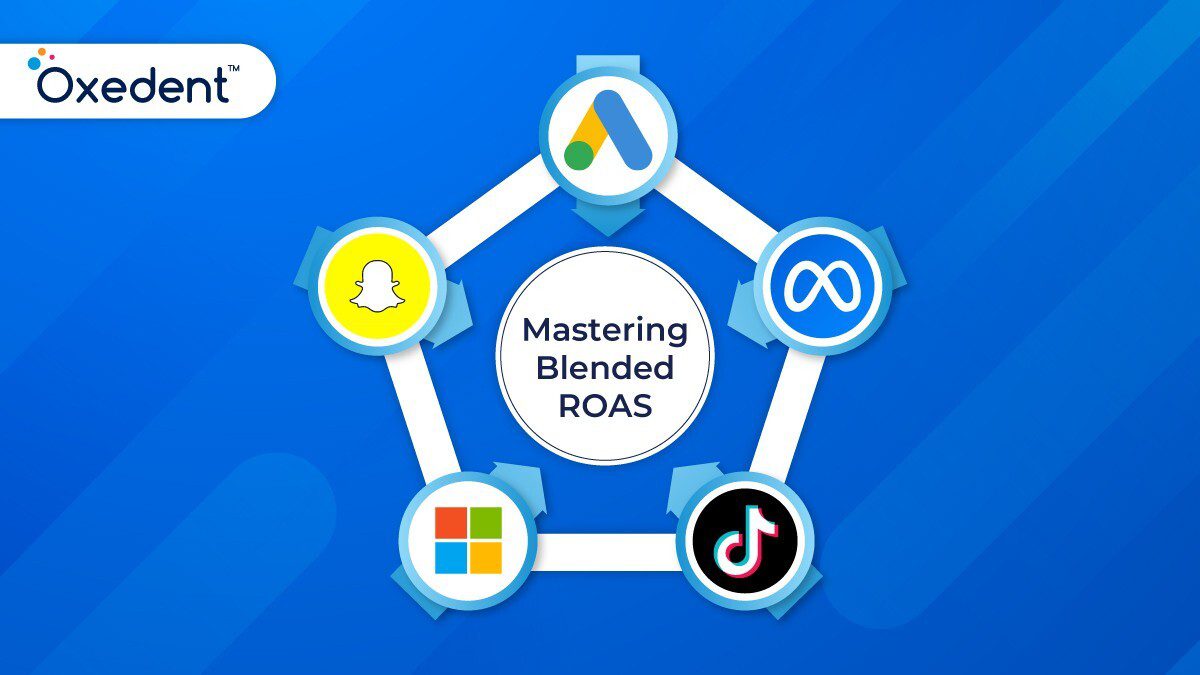
Welcome to the 3rd issue of ‘Monday Ad-Ventures’ by Oxedent! In this edition, we’ll explore the importance of blended ROAS (Return ... Read More
Underrated Shopify Apps 1. BeProfit: Get a clear picture of your eCommerce profits. Leverage data to increase sales and grow your ... Read More
How to cut down RTO RTOs happen when the buyer’s address in unavailable and the product has to be shipped ... Read More
Welcome to another edition of Monday Ad-Ventures, where we share valuable insights to help you improve the performance of your ... Read More
Shopify SMS Marketing Targeting and retargeting your target audience with emails is real legwork, but when you hit the right ... Read More
Are you looking for a new way to run ads and reach net new prospects for your eCommerce business? Facebook’s ... Read More
Welcome to another edition of Monday Ad-Ventures, where we bring you the latest insights and strategies to help your eCommerce ... Read More
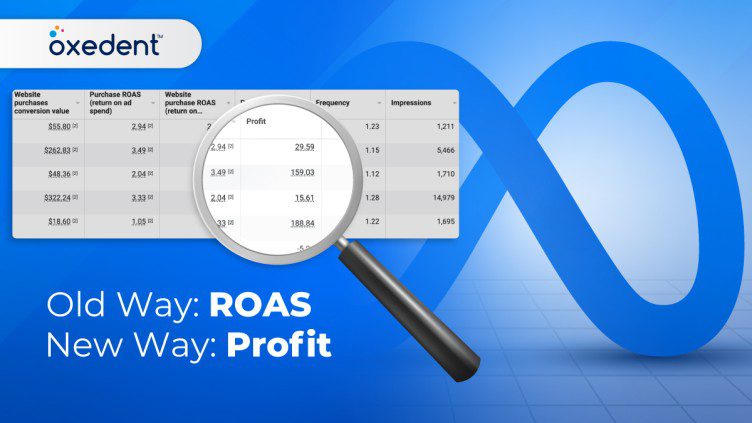
Let’s challenge the status quo this week. Are you glued to your Return on Ad Spend (ROAS) metric? If yes, ... Read More
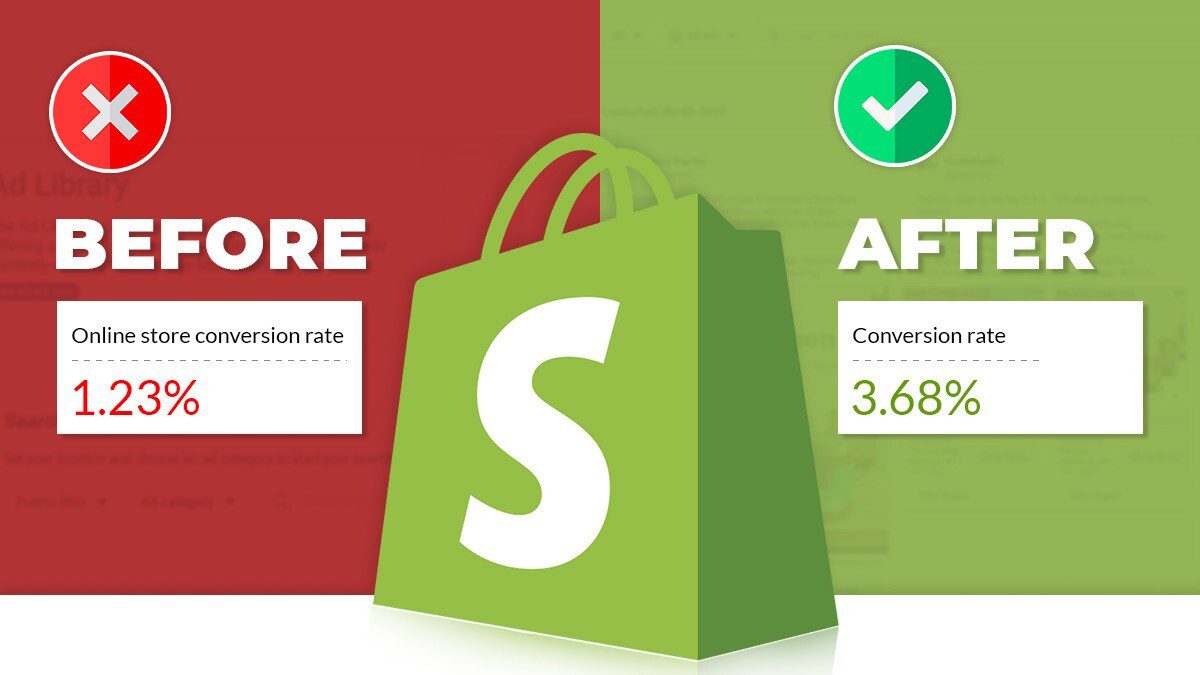
Ever wondered why some ecommerce landing pages convert at a whopping 3% or more while others hardly make a dent? ... Read More

Facebook Ads Agency in London Facebook Ads Agency in London: In today’s digital world, advertising on social media platforms has ... Read More

Google Ads Agency in London Google Ads Agency in London: In today’s digital age, businesses need to establish a strong ... Read More

Adwords PPC Management In The UK Adwords PPC Management In The UK: Pay-per-click (PPC) advertising has become an integral part ... Read More

Adwords Management Company in the UK Adwords Management Company in the UK: In the competitive digital landscape of the United ... Read More

Google Advertising Agency In The UK In today’s digital age, advertising plays a vital role in the success of businesses. ... Read More

Adwords Management Agency In The UK Adwords Management Agency In The UK: Are you a business owner in the UK ... Read More

Pay Per Click Management Company in The UK Pay Per Click Management Company in The UK: In today’s digital landscape, ... Read More

eCommerce PPC Agency In The UK Ecommerce PPC Agency In The UK: In the competitive landscape of the UK’s e-commerce ... Read More

eCommerce PPC Agency In The UK eCommerce PPC Agency In The UK: In the digital age, eCommerce has become a ... Read More

eCommerce Marketing Agency In The UK In today’s digital age, eCommerce has revolutionized the way businesses operate and interact with ... Read More

Facebook Ads Agency In The UK Facebook Ads Agency In The UK: In today’s digital era, advertising on social media ... Read More

PPC Agency in London In today’s digital landscape, businesses are constantly looking for effective ways to reach their target audience ... Read More

Looking for reliable PPC services in the UK? Explore our comprehensive guide on PPC, featuring a leading PPC agency in ... Read More
Welcome to your quick Monday Ad-Ventures from Oxedent. This week, let’s make the most of Google’s Performance Max (P.Max) for ... Read More
Welcome to a new week of Ad-Ventures! This week, we’re exploring how to find your favorite UA reports within Google’s ... Read More
Google Search Ads Optimisation Checklist Optimising your Google Ads campaigns is crucial, but have you given a thought to how ... Read More

eCommerce Performance Marketing Agency In India eCommerce Performance Marketing Agency In India: The digital space is filled with competitive brands ... Read More
As you scale, there’s an inverse relationship between profitability and reach. The wider you cast your net, the more varied ... Read More

What is Google Ads? Definition and Overview: Google Ads, previously known as Google AdWords, is the online advertising platform developed ... Read More
Every week, we dive deep into the world of eCommerce marketing, and today, we’re tackling a question that’s been on ... Read More

In the bustling heart of India, Kolkata stands as a testament to rich history, vibrant culture, and, contrary to popular ... Read More

D2C Marketing Agency In India In the evolving market, finding the right D2C marketing agency in India as a D2C ... Read More
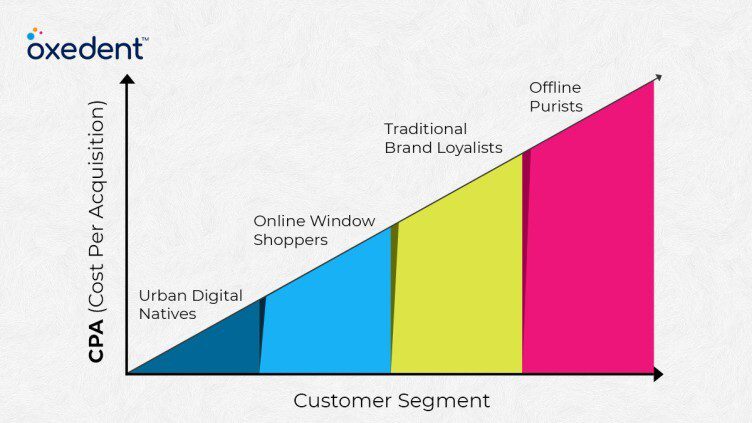
Hello Ad-Venturers! One of the most common questions we get from our clients is: “Why does my Cost Per Acquisition ... Read More

eCommerce Marketing Agency In India Finding out the best eCommerce marketing agency in India is indeed tough because there are ... Read More
Facebook Ads Agency In India Exploring the dynamic world of Facebook marketing in India, we uncover the elite of agencies ... Read More

eCommerce PPC agency The article provides an in-depth guide on selecting the best eCommerce PPC (Pay-Per-Click) agencies in 2024. It ... Read More

PPC Agency For Small Business While many PPC agencies focus on clients with high budgets, small businesses are often left ... Read More

PPC Agency In Reading If you are searching for a PPC agency in Reading, you are in luck! We have ... Read More

PPC Agency In Berkshire Many PPC agencies promise results, but their ultimate outcome is zero. Carving out the desired ROI ... Read More

PPC Agency In Windsor Selecting the best PPC agency in Windsor can significantly amplify your advertising efforts, ensuring targeted, creative, ... Read More
PPC Agency In Bracknell With the dynamics in the PPC domain changing every now and then, keeping up with the ... Read More

PPC Agency In Maidenhead The competition is fierce, and finding the right PPC agency to manage your ad campaigns can ... Read More
PPC Agency In Wokingham Launching PPC campaigns generates traffic and builds brand awareness. But are you potent enough or have ... Read More

PPC Agency In Newbury Businesses are increasingly relying on digital marketing, particularly PPC advertising, to gain visibility and growth. This ... Read More
eCommerce PPC Agency Not all agencies that claim to bring results are core PPC agencies. Some also cater to other ... Read More

PPC Agency In Bristol The rush is significant, and getting highlighted turns out to be a daunting task altogether. To ... Read More

PPC Agency In Cardiff Choosing a PPC agency among the competition can be challenging, but focusing on various aspects, especially ... Read More

PPC Agency In Bath Selecting the right PPC agency in Bath is crucial for eCommerce businesses, as the wrong choice ... Read More
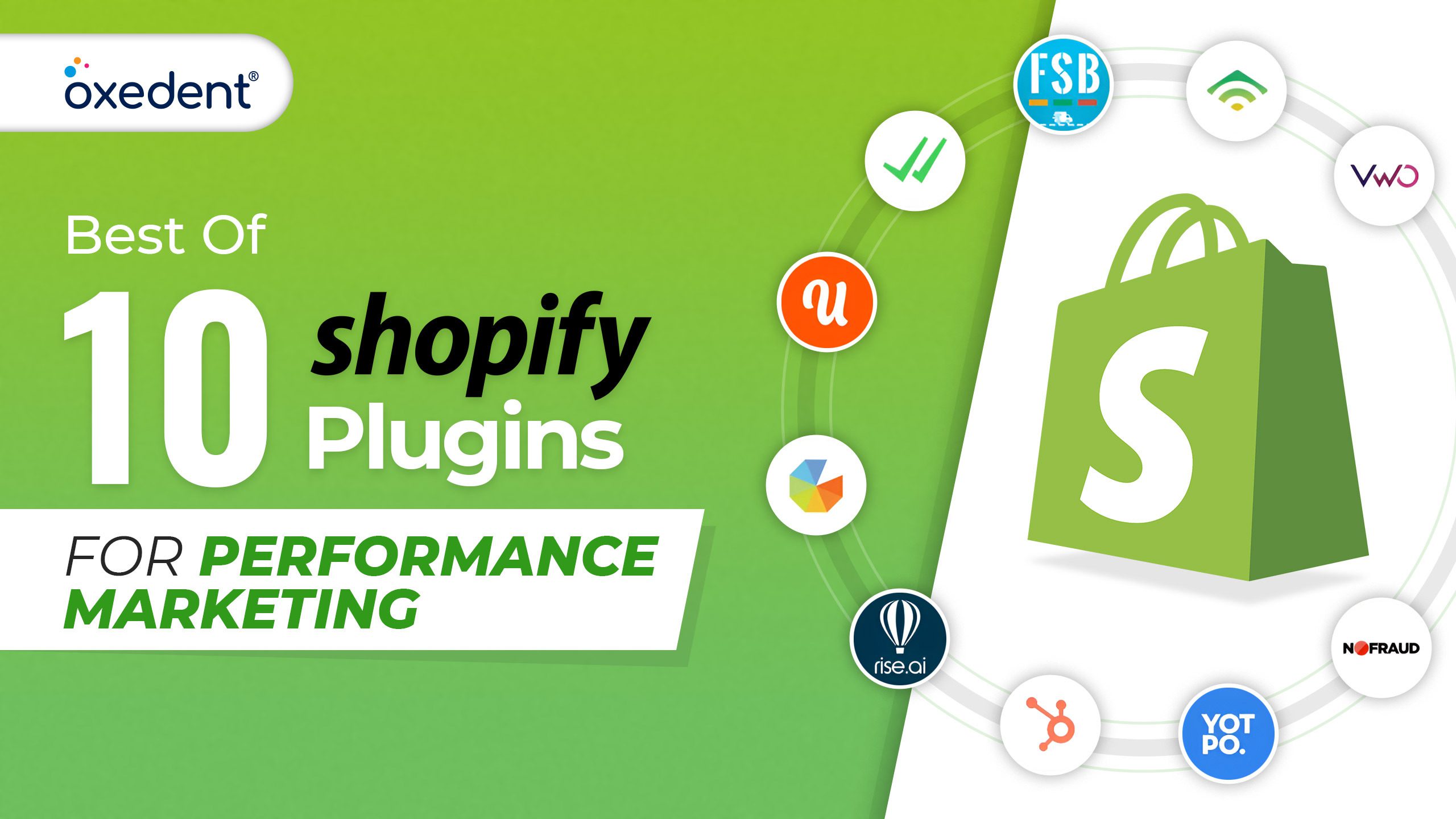
Your eCommerce online store is all ready to take off, but one thing is missing – the right Shopify plugins ... Read More

Home decor brands are facing fierce competition as demand grows. While traditional methods keep brands in the spotlight, paid marketing ... Read More
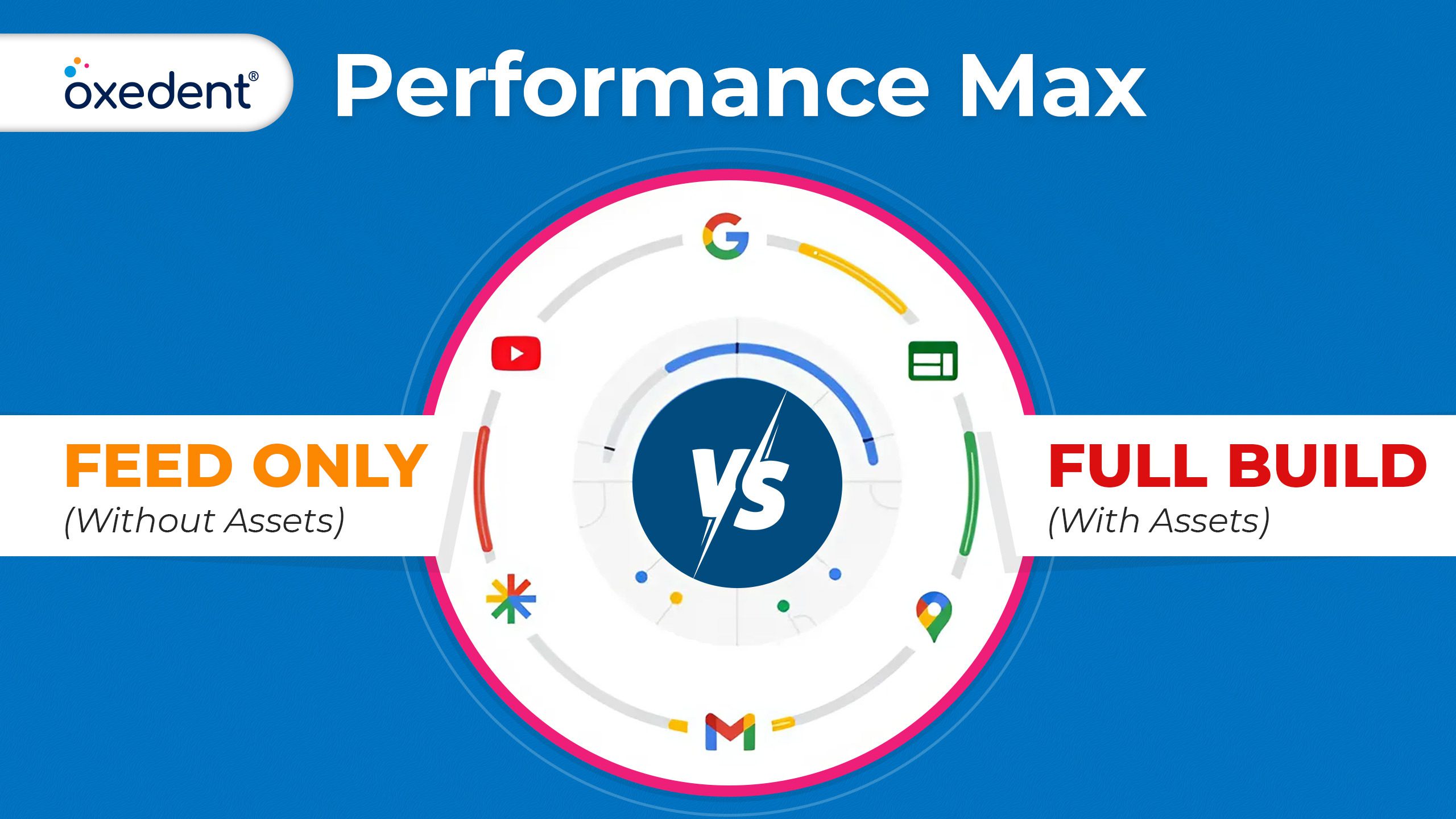
Pmax campaigns are the game changer for all advertisers, but the conflict arises when choosing a definitive approach – Feed ... Read More
Maximising ad efficiency starts with effective keyword research, which helps to find the right words and phrases your audience uses ... Read More
The BFCM period is an opportunity for advertisers to drive massive business growth. Yet, some shy away from facing the ... Read More
Is your Facebook Ads not working yet? With over 70% of Facebook users logging into the platform, your business is ... Read More

Starting with your Google ads campaigns is not enough for this Black Friday season. Instead, take advantage of performance max ... Read More
Google Ads is one of the most powerful tools for driving targeted traffic, generating leads, and increasing revenue. However, choosing ... Read More

Why ecommerce ads are not profitable often comes down to weak margins, poor tracking, bad traffic and the wrong scaling decisions. ... Read More

Learn how to reduce wasted ad spend with tighter targeting, better feeds, cleaner data, and profit-first optimisation across paid campaigns. ... Read More

10 google shopping feed optimisation tips to cut wasted spend, improve relevance, and help profitable eCommerce brands scale Shopping campaigns. ... Read More

Learn how to improve ROAS ecommerce brands depend on with sharper targeting, cleaner feeds, better margins and tighter budget control. ... Read More

Learn when to hire a PPC agency for eCommerce growth, better ROAS, tighter spend control, and faster scaling without wasting budget. ... Read More

A google ads audit for ecommerce should expose wasted spend, weak structure and feed issues fast - so you can scale profitably with clarity. ... Read More

Facebook ads for online stores can drive profitable growth when campaigns are built around margin, data quality, creative testing and scale. ... Read More

Performance max for ecommerce can drive growth fast - but only with the right feed, data and controls. Here’s how to make it profitable. ... Read More

Learn how to scale ecommerce ads without wrecking ROAS. A profit-first framework for growing spend, controlling waste and lifting revenue. ... Read More

ecommerce cpa benchmarks only help if you read them properly. Learn what good CPA looks like by margin, channel, intent and scale stage. ... Read More

How much should ecommerce brands spend on ads? Learn how to set budgets by margin, growth stage, CAC, ROAS, and channel performance. ... Read More

A profitable google shopping ads strategy starts with feed quality, clean structure and margin-led bidding - not more clicks or wasted spend. ... Read More

How does performance max work for ecommerce? Learn how Google automates targeting, bidding and creative, and where profit can slip. ... Read More

Find the best google ads structure for ecommerce to cut wasted spend, improve ROAS, and scale profitable growth with sharper campaign control. ... Read More

A product feed optimisation service fixes weak Shopping and PMax data, cuts wasted spend, and helps eCommerce brands scale profitably. ... Read More

Use this ecommerce ad account audit checklist to spot wasted spend, fix weak structure, and improve profitable growth across paid shopping and social. ... Read More

Ecommerce PPC management services built for profitable growth, lower wasted spend, stronger ROAS, and smarter scaling across paid channels. ... Read More
Unlock better ROI with essential Google Ads agency reporting standards. Learn how to demand clarity and actionable insights for your campaigns! ... Read More
Discover what a Google Ads campaign audit is and learn how to identify hidden issues to boost profits effectively. Click to optimize your ads! ... Read More

A profit first ecommerce advertising guide for brands that want lower waste, stronger ROAS, and scalable paid media built on real margins. ... Read More
Use our ecommerce PPC agency checklist to hire the right team, scale your brand effectively, and ensure real results from your campaigns. ... Read More
Struggling with why Google Ads are not converting? Discover effective solutions to boost your eCommerce growth and maximize your ad spend! ... Read More

Google Ads for online stores can drive profitable growth - if campaigns are built around margins, feed quality and disciplined scaling. ... Read More
Discover why eCommerce needs specialist agency support to boost profits and achieve strategic growth. Get the insights for your brand's success! ... Read More
Discover the crucial role of PPC in ecommerce growth. Learn how targeted ads can boost your online retail success instantly! ... Read More

Google Shopping management should protect margin, cut waste and scale revenue. Here's what strong account management actually looks like. ... Read More
Learn how to structure your Google Ads product feed effectively to boost your ROI. Unlock maximum conversions with our step-by-step guide! ... Read More
Unlock the secrets of a successful Google Ads agency campaign structure review. Learn to optimize your campaigns and maximize ROI! ... Read More

Google Ads vs Meta Ads for eCommerce: compare intent, targeting, costs and scale to decide which platform drives stronger profit. ... Read More
Ready to boost your online sales? Learn how to hire a Google Ads agency for ecommerce to maximize your ad budget and drive real profits. ... Read More
Unlock the secrets of successful campaigns with our Google Ads agency Performance Max expertise guide. Optimize your strategy today! ... Read More

Learn how to optimise product feeds to cut wasted spend, improve Shopping visibility, and scale profitable eCommerce campaigns with cleaner data. ... Read More
Discover critical insights in our Google Ads audit red flags list for eCommerce. Stop wasting budget and optimize your campaigns now! ... Read More
Discover what is Google Ads profitability focus and learn how to optimize your campaigns for actual profit, not just conversions! ... Read More

In house vs agency PPC is not about preference. It is about profit, speed, accountability, and whether your team can scale without waste. ... Read More
Discover why PPC costs are rising in the UK and how to adapt your ad strategies for better returns. Read to gain insights and optimize your campaigns. ... Read More
Discover the essentials of VAT and Google Ads UK. Understand the reverse charge mechanism and avoid costly mistakes in your eCommerce business. ... Read More

Profitable customer acquisition ecommerce depends on margin control, clean data, smarter bidding and scaling only what converts into cash. ... Read More
Discover what is google ads conversion setup to boost your ad performance. Our 2026 guide shows you how to track success effectively! ... Read More
Master your ad spend with our 2026 guide! Discover how a budget management Google Ads agency can boost your ROI and cut waste today. ... Read More

Learn how to lower blended CAC with sharper channel mix, tighter tracking, better conversion rates, and less wasted spend across paid media. ... Read More
Discover the ppc agency specialisation benefits for ecommerce brands. Learn how focused expertise can maximize your ad spend efficiency! ... Read More
Discover the true role of Google Ads in ecommerce revenue. Learn how to connect with ready-to-purchase buyers and boost your sales! ... Read More

Choosing a Google Shopping agency? Learn what drives profit, cuts waste and helps established eCommerce brands scale with control. ... Read More
Discover crucial ppc agency red flags ecommerce owners must know to protect your ad budget and boost sales. Read this essential guide! ... Read More
Discover what a PPC campaign structure is and how mastering it can transform your ecommerce advertising results. Start optimizing today! ... Read More
Discover 6 commonground.digital alternatives agencies to help you choose the best digital marketing solutions for your needs. ... Read More

Learn how to improve ecommerce conversion tracking so your ad spend reflects real revenue, cleaner attribution, and stronger scaling decisions. ... Read More
Discover the vital role of Google Analytics in PPC campaigns. Uncover insights to optimize ad performance and boost revenue effectively! ... Read More

Choosing a Shopify Google Ads agency? Learn what separates profit-focused specialists from generalists and how to avoid wasted spend. ... Read More
Discover the vital role of a PPC agency in scaling your eCommerce growth. Unlock profitable customer acquisition and strategic insights! ... Read More

Explore 5 khepridigital.com alternatives agencies to help you optimise your paid media management and find the right fit for your needs. ... Read More

Learn how to reduce pmax waste with tighter feeds, smarter asset groups, better exclusions, and profit-led signals that protect scale. ... Read More
Discover why agencies outsource PPC management to enhance campaign performance and reduce costs. Unlock expert strategies for successful advertising! ... Read More

Discover these 6 roihunt.in alternatives agencies to make informed decisions for your PPC management and performance marketing strategies. ... Read More

Need a google ads agency for retailers? Learn what separates profit-first specialists from generalists, and how to avoid wasted spend. ... Read More
Discover the types of PPC agency pricing models in 2026. Learn which model suits your business to maximize ad spend and improve ROI! ... Read More
Discover the essential Google Ads campaign types for ecommerce in 2026. Learn how to maximize ROI and optimize your ad strategy today! ... Read More

Learn how to calculate breakeven ROAS with clear formulas, margin examples, and the cost inputs eCommerce brands must not ignore. ... Read More
Discover what a Google Ads agency does to boost your business. Unlock targeted traffic and growth strategies with expert insights! ... Read More
Discover the role of Shopify Google Ads integration in maximizing your ad efficiency and boosting sales for your online store in 2026. ... Read More
Google Ads vs Shopping Ads: learn which drives better eCommerce profit, when each channel works best, and how to avoid wasted spend. ... Read More
Discover what is Google Ads quality optimisation and learn how to boost your campaign performance and ROI in our 2026 comprehensive guide. ... Read More
Discover what is Google Ads account structure in our 2026 guide. Master the hierarchy for better targeting, budgets, and performance results! ... Read More

A profitable ecommerce ad strategy prioritises margin, feed quality and waste reduction to scale revenue without sacrificing return. ... Read More
Discover how to scale ecommerce revenue with paid ads in 2026. Learn strategies to boost ROAS and optimize your ad spend effectively! ... Read More
Discover the types of Google Ads bidding strategies in our 2026 guide. Learn how to optimize your campaigns for maximum results! ... Read More

Looking for the best ecommerce PPC agencies? Learn how to assess specialist partners, avoid wasted spend, and choose for profit, not hype. ... Read More
Discover why a Google Ads agency beats automation in 2026. Learn how expert strategy drives better ecommerce results and budget efficiency. ... Read More
Discover why ecommerce needs Google Ads retargeting to recover lost visitors and boost sales. Turn potential into profit today! ... Read More

Learn how to lower ecommerce CPA with smarter targeting, feed optimisation, landing page fixes, and profit-first bidding that scales. ... Read More
Discover the role of campaign testing in PPC to boost performance. Learn effective strategies and proven benefits for your advertising success! ... Read More
Learn how to switch your PPC agency smoothly for ecommerce. Protect performance and maintain data continuity with our proven strategies. ... Read More

Learn how to improve MER ecommerce performance with sharper spend control, better attribution, stronger margins, and smarter scaling decisions. ... Read More
Struggling to fix low conversion rate Google Ads? Learn essential strategies to optimize tracking, targeting, and improve your ROI today! ... Read More
Learn how to assess a Google Ads feed management agency effectively. Discover key evaluation criteria to maximize your ad spend and ROI. ... Read More

What does a PPC agency do for eCommerce brands? Learn how specialist PPC agencies cut waste, improve ROAS, and scale profitable revenue. ... Read More
Discover what is Google Ads spend efficiency in 2026. Learn key metrics and AI strategies to maximize your advertising ROI and reduce costs. ... Read More
Learn how to transition Google Ads to a new agency smoothly. Retain account ownership and keep your campaign history intact for success. ... Read More

Paid media for ecommerce brands should drive profit, not just traffic. Learn what actually scales revenue, controls waste, and protects margin. ... Read More
Discover the essential PPC agency vetting criteria list to choose the right partner for measurable returns. Boost your e-commerce success! ... Read More
Discover the critical role of Google Ads in brand growth. Learn strategies to enhance visibility and attract high-intent audiences effectively. ... Read More

A meta ads ecommerce guide for established brands focused on profitable growth, stronger ROAS, cleaner tracking, and smarter campaign scaling. ... Read More
Discover the crucial role of budget allocation in PPC for 2026. Learn strategies that maximize ad spend and boost campaign performance now! ... Read More
Discover the role of a PPC agency in feed management to optimize your product data, boost campaign performance, and drive sales effectively. ... Read More

Server side tracking ecommerce gives brands cleaner data, better attribution and stronger ad decisions when browser tracking starts to fail. ... Read More
Learn how to run Meta ads for ecommerce in the US effectively. Drive sales, optimize spending, and leverage data for success. ... Read More
Discover the essential types of paid ads for ecommerce UK in this 2026 guide. Learn how to maximize your budget for greater profits! ... Read More

Performance Max vs standard shopping: which campaign type drives better ROAS, cleaner data, and more control for established eCommerce brands? ... Read More
Discover what is profitability-led PPC and how it maximizes net profit in paid ads. Learn strategies and tools for success in 2026. ... Read More

Explore US ecommerce marketplace ad types for 2026. Learn to maximize your budget with insights on formats, payment models, and strategies. ... Read More

Learn how to audit Google Shopping campaigns properly - from feed quality to spend waste, query control and profit signals that drive growth. ... Read More
Discover what a Google Ads growth plan is and how to create one that drives success. Align your campaigns with business goals today! ... Read More
Discover why ecommerce ads lose money and learn effective strategies to improve your profit margins. Don't let budget waste limit your success! ... Read More

An ecommerce ppc case study showing how profit-first campaign fixes cut waste, improved ROAS, and scaled revenue without chasing clicks. ... Read More
Explore 6 pepper.agency alternatives for agencies. Compare options and decide which PPC agency best suits your ecommerce advertising needs. ... Read More
Discover what is a Google Partner Agency and why choosing one can enhance your digital marketing efforts. Learn the benefits today! ... Read More

Best Performance Max practices for eCommerce brands that want stronger ROAS, cleaner data, smarter scaling, and less wasted spend. ... Read More
Discover what Google Ads budget pacing is and how it optimizes your ad spend. Learn to control costs and boost profitability with our 2026 guide! ... Read More

Choosing a Performance Max agency means judging profit, feed quality and control - not reports full of clicks, spend and vague promises. ... Read More
Discover what is Google Shopping UK and how it connects retailers with eager buyers. Unlock insights for your 2026 e-commerce strategy. ... Read More

A google shopping feed setup guide for eCommerce brands that want cleaner data, fewer disapprovals, and stronger ROAS from Google Shopping. ... Read More
Discover the benefits of specialist Google Ads management for ecommerce. From higher conversion rates to reduced spend, see how experts drive growth. ... Read More
Discover the common Google Ads agency mistakes that cost ecommerce brands. Learn how to protect your budget and boost returns today! ... Read More

Learn how to scale shopping campaigns without wrecking ROAS. A profit-first framework for eCommerce brands ready to grow with control. ... Read More
Discover why PPC needs ongoing optimisation to drive profit. Stay ahead of market changes and maximize your advertising budget today! ... Read More
Discover what a PPC fulfillment partner is and how it can boost your agency’s results. Maximize your PPC strategy with expert insights. ... Read More
Why is my ROAS dropping? Find the real causes, separate normal volatility from profit risk, and fix eCommerce campaigns before wasted spend compounds. ... Read More
Explore why Google Ads needs expert management in 2026. Learn how skilled operators can turn clicks into profits and optimize your campaigns. ... Read More
Discover the Google Ads agency smart bidding approach in this 2026 guide. Learn strategies to maximize conversions and improve your ROI. ... Read More

The best Google Shopping strategies protect margin first: improve feeds, control queries, segment inventory and scale only profitable demand with care. ... Read More
Discover the benefits of hiring a specialist PPC agency in 2026. Maximize your ad performance and ROI with dedicated experts. ... Read More
Discover the role of search exclusions in Google Ads. Protect your budget and improve campaign effectiveness with targeted keyword blocking. ... Read More

Are Performance Max campaigns worth it for eCommerce? Learn when they protect profit, when they waste budget, and how to assess them properly at scale. ... Read More
Discover what a PPC performance review is and how it can maximize your ad spend. Learn to assess campaigns effectively and boost profits. ... Read More
Discover the role of search intent in Google Ads in 2026. Learn how aligning ads with user intent boosts your Quality Scores and lowers costs. ... Read More

An ecommerce scaling case study showing how profitable brands reduce wasted spend, fix feeds and campaign structure, then grow revenue with control daily. ... Read More
Discover how to scale revenue with Google Ads managed service. Learn proven strategies for eCommerce success and boost your sales profitably. ... Read More
Discover how to expand ecommerce ads into new markets effectively. This 2026 guide provides strategies for profitable international growth. ... Read More

This ecommerce profitability metrics guide shows retailers how to measure margin, acquisition costs and cash-ready growth before scaling paid media today. ... Read More
Learn how to choose a Google Shopping specialist agency to boost your ecommerce growth, enhance your ad spend, and improve profitability. ... Read More
Discover the role of ROAS targets in Google Ads. Learn how this strategy enhances profitability and optimizes your advertising efforts. ... Read More

Why are shopping ads not converting profitably? Find the feed, traffic, pricing and measurement issues draining spend, then fix them with control today. ... Read More
What is the PPC reseller model? Discover how agencies can sell PPC services without hiring in-house teams, reducing costs and expanding offerings. ... Read More
Unlock the secrets to successful campaigns with our PPC agency onboarding process guide. Streamline setup, align goals, and launch with confidence! ... Read More

Our ecommerce Google Ads management guide shows established retailers how to cut waste, protect margin and scale profitable revenue with greater control. ... Read More
Maximize your profitability with our comprehensive ecommerce ad account audit checklist. Ensure accurate tracking, effective campaigns, and optimized budgets. ... Read More
Discover what is white label Google Ads and how eCommerce agencies can leverage this strategy to elevate their brand and streamline services. ... Read More

This Facebook ads scaling guide shows eCommerce brands how to raise spend without sacrificing margin, measurement clarity, or profitable growth for scaling retail brands. ... Read More
Discover what is ROAS in ecommerce and learn how it boosts ad performance. Explore benchmarks, formulas, and a 2026 guide! ... Read More
Learn how to reduce wasted ad spend in ecommerce with three actionable strategies. Recover up to 30% of your budget today! ... Read More
Unlock the power of ecommerce ad creative best practices. Improve your ROAS with effective hooks, quick demos, and smart testing strategies. ... Read More

Reduce wasted spend in ecommerce with a profit-led PPC process: cleaner data, sharper feeds, tighter targeting and budgets that earn their place every day. ... Read More

Discover why Google Shopping beats search for UK retailers. Learn how product ads drive higher conversion rates and qualified buyers. ... Read More
Discover key ecommerce PPC mistakes UK brands frequently make. Learn how to fix them and recover your budget quickly! ... Read More

Wondering why is my CPA increasing? Identify auction pressure, conversion leaks and tracking faults, then cut waste without damaging profitable scale. ... Read More
Discover why Google Ads requires daily monitoring to prevent wasted spend and performance issues in eCommerce. Stay ahead of potential pitfalls! ... Read More

The best ecommerce ad metrics reveal profitable growth, helping retail brands reduce wasted spend, scale safely and hold every campaign to account fully. ... Read More
Explore effective thegoodmarketer.co.uk alternatives for ecommerce PPC. Find top agencies to boost your ad performance and ROI. ... Read More
Discover what a promotional feed is and how it boosts your product listings on Google Merchant Center. Maximize your offers today! ... Read More

A ROAS improvement case study for eCommerce brands: how tighter spend control, feed fixes and profit targets turn wasted budget into scalable sales now. ... Read More
Learn how to set up remarketing for your ecommerce store effectively. Boost sales by showing visitors the products they viewed. Act now! ... Read More
Discover what a PMax asset group is and learn how to harness Google's automation for effective advertising across multiple platforms. ... Read More

A Google Ads management review for eCommerce brands: assess profit, feed quality, tracking, waste and scale before committing more budget with confidence. ... Read More
Discover how to transition client accounts to a white label provider seamlessly. Follow our checklist for a smooth, efficient process. ... Read More
Unlock growth with SEO Chelmsford services. Partner with Oxedent for eCommerce PPC that boosts revenue without long-term contracts. ... Read More
Discover what is Facebook Pixel explained in this beginner's guide. Learn to optimize ads, build audiences, and track conversions effectively. ... Read More

What does a PPC audit include? See how eCommerce accounts are checked for wasted spend, tracking gaps, feed issues and profitable growth opportunities. ... Read More
Discover the role of product titles in shopping and boost your visibility. Learn how to optimize titles for better clicks and sales. ... Read More
Discover how negative keywords enhance your PPC strategy by preventing wasted clicks, lowering costs, and boosting click-through rates. ... Read More

See how much ecommerce PPC costs, what drives spend and fees, and how established retailers can judge profitability before scaling campaigns profitably. ... Read More
Learn how to define your bid strategy for Google and Meta ads to maximize returns, control budgets, and achieve your campaign goals. ... Read More
Discover how automated bidding works and learn when to use it to maximize conversions and optimize ad performance effectively. ... Read More

Why Google Shopping ads underperform: fix feed quality, bidding, product economics and measurement to stop wasted spend and scale profitable retail growth. ... Read More
Discover the power of search term reports for PPC advertisers. Learn how to optimize your campaigns by identifying high-intent queries and irrelevant terms. ... Read More
Discover how a Performance Max strategy can enhance your ecommerce campaigns, boosting conversions and maximizing your ad budget effectively. ... Read More

Ecommerce ad spend wastage erodes margin long before it shows in headline ROAS. Find the leaks, fix tracking and scale only profitable demand and discipline. ... Read More
Discover how white-label feed management enhances your agency’s efficiency, driving better Google Shopping results while you maintain client control. ... Read More
Discover how PPC outsourcing can enhance your agency's efficiency and profitability. Learn practical strategies for successful collaboration. ... Read More

When should brands use PMax? Learn the profit-first signals, tracking standards and control measures eCommerce teams need before scaling Google automation. ... Read More
Discover what a GCLID is and how it enhances ad tracking. Learn to enable auto-tagging for better conversion insights today! ... Read More
Discover effective keyword match type strategies to boost your PPC campaigns. Learn how to optimize your ads and maximize conversions. ... Read More

A Google Merchant Center suspension can halt profitable Shopping revenue overnight. Find the root cause, fix it properly and prevent a costly repeat later. ... Read More
Discover how to balance brand and non-brand keyword strategies to maximize conversions and attract new customers effectively. ... Read More
Discover Performance Max, the AI-driven Google Ads campaign type that boosts conversions across multiple platforms. Learn how it works! ... Read More

Why is Google Shopping expensive? Learn what raises CPCs, wastes budget and how eCommerce brands can bring cost of sale back under control profitably. ... Read More
Discover how to choose the right SEO strategy in the UK. From specialist agencies to paid media, find the best route for your growth. ... Read More
Discover how lookalike audiences can expand your reach by targeting new users who share traits with your best customers. Learn more! ... Read More
A no contract PPC agency should earn its fee through profitable growth, clear data and accountable optimisation - not a restrictive long-term agreement. ... Read More
Discover how Smart Bidding in Google Ads uses machine learning to optimize your bids for maximum conversions and value in real-time. ... Read More
Discover how prospecting and retargeting work together in ecommerce PPC to maximize growth and conversions. Learn effective strategies now! ... Read More

Find the best bidding strategies ecommerce brands use to protect margin, cut wasted spend and scale Google Ads with confidence and control profitably now. ... Read More
Discover how incrementality testing ads can clarify your advertising impact, ensuring every dollar spent drives real sales. Protect your budget now! ... Read More
Discover how conversion lag in Google Ads affects your ecommerce metrics. Learn to accurately interpret your data before making changes. ... Read More

Google Shopping feed errors can suppress products and waste budget. Find the faults that matter, fix them quickly, and protect profitable growth at scale. ... Read More
Discover essential UTM naming conventions to streamline your marketing efforts. Learn effective strategies that enhance campaign clarity today! ... Read More
Discover the costs of Google Ads in the UK for 2026. Learn about CPC benchmarks, budgets, and strategies to optimize your spending. ... Read More

Merchant center suspension fixes that address root causes, protect revenue and get your Shopping campaigns eligible to serve again quickly and safely now. ... Read More
Discover how and when to use brand exclusions in Performance Max to optimize your ad spend and improve campaign performance. ... Read More

Ecommerce brand safety for Facebook Ads: set Moderate inventory, upload block lists, and run weekly delivery reports to protect ROAS. ... Read More

Paid search for online retailers built around profitable growth: control spend, improve product visibility and scale only when the numbers work properly. ... Read More
Production ready PMax asset checklist for retail ecommerce: the five assets required to publish, common upload blockers to avoid, and tests to fix them. ... Read More
UK ecommerce: find why Meta ads aren't spending. Use Oxedent's 10 Point checklist and change one variable at a time to restart delivery. ... Read More

A PPC agency for online retailers should protect margin, cut wasted spend and scale demand across Google, Shopping, Meta and Performance Max campaigns. ... Read More
Run concept first Meta creative tests for 2026: isolate one variable, run 7–14 days to 50 optimization events, and protect ecommerce ROAS. ... Read More
Ecommerce engineers' technical steps for Consent Mode v2: confirm all four consent signals, stage rollouts, verify seven days of modelling, and check... ... Read More

Google Ads for retail brands should create profitable demand, not cheaper clicks. See how account structure, feeds and measurement protect margin at scale. ... Read More
Practical checklist for Merchant Center Next migration. Map classic workflows, fix setup and data sources, and clear account diagnostics. ... Read More
UK action plan to fix Merchant Center misrepresentation: align site and feed, verify identity, capture dated screenshots, and appeal through Merchant Center. ... Read More

Wondering what budget for Google Shopping makes commercial sense? Set a profitable starting point, protect margin and scale spend from proven data safely. ... Read More
Use data driven attribution to surface undervalued display, video, and Shopping traffic, check Google Ads and GA4 eligibility, and feed corrected signals... ... Read More
Checklist for ecommerce teams to import offline sales into Google Ads: audit, capture GCLID, wire CRM, automate uploads, and feed Smart Bidding. ... Read More

Choose a Facebook ads agency UK ecommerce brands can trust to cut waste, protect margin and scale profitable customer acquisition with accountability. ... Read More
Fix a Merchant Center suspension with an audit first workflow. Run site and feed checks, collect dated evidence, and submit focused appeal. ... Read More
Set up enhanced conversions with the Google tag, validate hashed payloads in Chrome DevTools, and ensure EEA/UK consent compliance. Includes Oxedent QA... ... Read More

A Google Ads audit review exposes wasted spend, tracking gaps and missed profit opportunities for established eCommerce brands ready to scale properly. ... Read More
Implementation-first steps to get Shopify's Conversions API live: a quick 30-minute setup, verified testing, privacy checks, and when to hire Oxedent. ... Read More
Find why Google flagged your ad, apply step by step fixes, and add account level guardrails to prevent future Google Ads policy violations. ... Read More

Google Ads can scale an eCommerce brand, but only when campaigns, product data and bidding are built around margin, not vanity metrics or traffic quality. ... Read More
Google Ads can scale an eCommerce brand, but only when campaigns, product data and bidding are built around margin, not vanity metrics or traffic quality. ... Read More
Decide whether to use manual or Smart Bidding based on data readiness. See the 30 conversions threshold, migration checklist, and rollback rules. ... Read More
Practical ecommerce playbook for testing value rules: start small (+10–20%), run 2–4 week tests, add guardrails, and measure blended MER and cohort LTV. ... Read More

Facebook Ads for established eCommerce brands: build profitable campaigns, control acquisition costs and scale revenue without wasting budget needlessly. ... Read More

90 minute GTIN recovery checklist for ecommerce sellers to fix missing GTINs, clear Merchant Center warnings, and restore Google Shopping. ... Read More
Google Shopping B2B playbook: align Merchant Center feed, checkout pricing and CRM conversions so bids optimize for real pipeline. ... Read More

Are Shopping ads profitable? Learn how margins, feed quality, conversion rate and intelligent bidding determine whether Google Shopping drives real profit for retailers. ... Read More
UK ecommerce guide to value based bidding using profit or predicted LTV. Fix GCLID/OCI, run 4–8 week tests, and protect ROAS. ... Read More
Agency grade playbook for PPC managers: set 1–7 day seasonality adjustments in Google Ads, script them via the API, scale from manager accounts, and audit... ... Read More

Learn how to calculate ecommerce breakeven ROAS using margin, variable costs and returns, then set paid-media targets that protect profit as you scale. ... Read More
Make Advantage+ catalogue ads profitable by fixing feed and Pixel issues first. Learn to verify content_id matching, split hero vs long-tail budgets, and... ... Read More
Ecommerce playbook for Advantage+ Shopping to Advantage+ Sales: setup steps, readiness checklist, and the 50 conversion learning threshold. ... Read More

UK retailer PPC results improve when campaigns are measured against margin, stock and repeat demand - not clicks, blended revenue or cheap traffic alone. ... Read More
Launch Performance Max without handing Google a black box. Verify tracking and GA4, fix feed and assets, structure asset groups, and run a short audit... ... Read More
Apply practitioner PMax rules: 3× CPA floor, margin aware tiers, protections, and 15–20% scaling steps. Get a free Oxedent audit to check your setup. ... Read More
See a Google Shopping turnaround example that cuts wasted spend, fixes feed and bidding issues, and rebuilds profitable, scalable ecommerce revenue with control. ... Read More
Practitioner ecommerce checklist for PMax audience signals: verify tags and lists, wait 24–72 hours, run a two week test, and avoid wasted spend. ... Read More
Find the PMax placement report in Google Ads and run a two pass agency review to flag safe exclusions without cutting valuable inventory. ... Read More

Learn how to fix ad fatigue in eCommerce campaigns with better creative rotation, audience control and profit-led testing that protects profitable scale. ... Read More
Practical eCommerce steps for Performance Max negative keywords: where to add them, which match types to use, a four-week test to spot cannibalization,... ... Read More
Export PMax search terms from Google Ads or the API. UK eCommerce workflow shows how to validate by conversion value and use safe negatives. ... Read More

A product feed can decide whether Google Shopping spend produces profitable sales or wasted clicks. Learn what to fix, measure and prioritise first with care. ... Read More
A practical eCommerce playbook for broad match and Smart Bidding. Protect margins, cut wasted spend, and follow a checklist for safe 1–2 week tests. ... Read More
Implementation-first PMax new-customer acquisition setup: hands-on tagging fixes, Customer Match sizing, feed-first asset groups, and six to eight week... ... Read More

Learn how to audit an ecommerce PPC account for wasted spend, weak tracking and profit leaks, then set a clear plan for profitable scale with confidence. ... Read More
Practical playbook to advertise restricted Google Ads categories: verification, HFSS checks, landing checks, appeals, or agency support. ... Read More
Use ecommerce dayparting safely: when it helps, platform limits (Amazon vs Google), conservative 10–30% starter modifiers, and the monitoring steps you need. ... Read More

Compare the best ecommerce attribution tools for serious retailers. Find the platform that exposes profitable channels, waste and scalable growth decisions. ... Read More
Audit first playbook for eCommerce PPC managers to detect and quantify PMax brand leakage, apply exclusions, and reveal true incremental ROAS. ... Read More
eCommerce playbook to raise budgets without losing ROAS: pace ramps, run experiment led tests (PIE), fix creative, feeds and pages. ... Read More

Google Ads profitability is not a platform metric. Learn how eCommerce brands calculate profitable spend, cut waste and scale without eroding margin safely. ... Read More
UK playbook with step by step Google and Microsoft exclusion steps, verification checks and a weekly routine to protect ROAS. ... Read More
Ops first playbook for eCommerce PPC teams to triage Shopping ad disapprovals. Six fixes to correct feeds, images and landing pages, plus how to force a... ... Read More
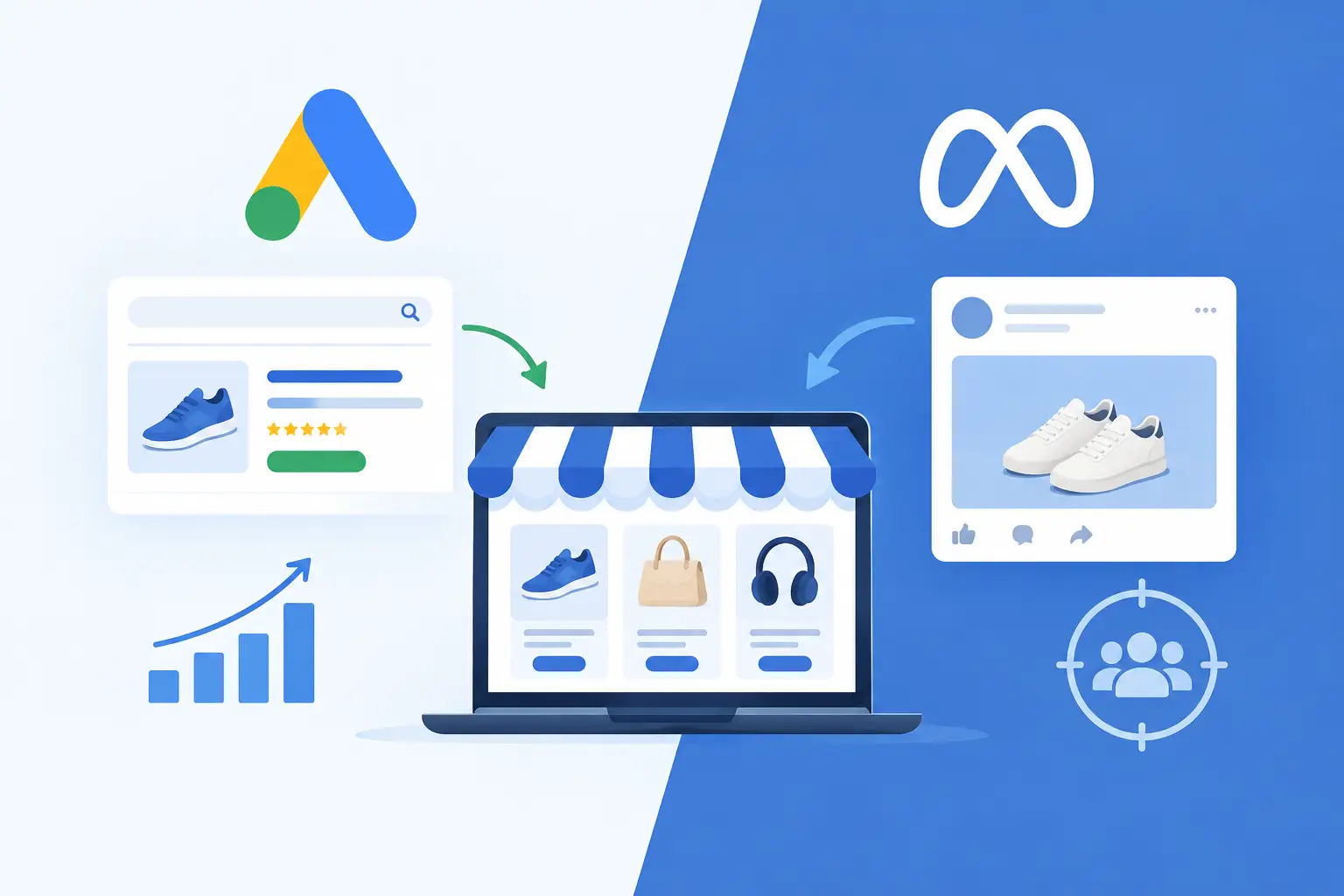
Google Ads versus Facebook Ads for eCommerce: compare intent, demand creation, costs and attribution to build a more profitable paid media mix for growth ... Read More
Set a Google Ads budget for your ecommerce store with agency tested rules: start at £20–£50/day, learn when to scale, and avoid wasted spend. ... Read More
Turn Google's price suggestions into profit: segment SKUs, set margin floors, run 7–14 day tests, and scale without blanket discounts. ... Read More

Ecommerce advertising trends are reshaping paid growth. Learn where retail brands should invest, what to test and how to protect profitable scale now. ... Read More
Practitioner checklist to decide when higher Shopping CPCs make sense. Fix feed data, test bids, and judge by conversion rate and ROAS before scaling. ... Read More
Agency tested troubleshooting for eCommerce teams. Use an 8 Step Commerce Manager workflow to find and fix dynamic ads catalog errors fast. ... Read More

Practical ways to improve ROAS: reduce wasted spend, sharpen product feeds and scale profitable eCommerce campaigns with greater confidence every month. ... Read More
Ready to grow your eCommerce sales?
Let’s discuss how to scale your eCommerce store with profit and if we’re the right partner to get you there.
